
You have 0 items in your cart

The Foundation of Business Success: Contract Management Basics
Business contract management is the systematic process of creating, executing, and analyzing contracts to maximize operational performance while minimizing financial risk. For beginners looking to understand this essential business function, here’s what you need to know:
- Definition: The end-to-end process of managing agreements throughout their lifecycle
- Purpose: To ensure contractual obligations are met, risks are mitigated, and value is maximized
- Key Stages: Creation, negotiation, execution, monitoring, renewal/termination
- Benefits: Reduces revenue leakage, improves compliance, improves business relationships
- Impact: Poor contract management can cost businesses up to 9% of annual revenue
Did you know that 90% of contracting professionals have difficulty finding the contract they need when they need it? Or that over 40% of businesses lack a defined process for storing executed documents? These statistics highlight why effective contract management isn’t just a legal nicety—it’s a business necessity.
Contracts govern approximately 75% of all business transactions, yet many organizations still rely on fragmented, manual processes that lead to missed renewals, compliance issues, and lost opportunities. Whether you’re managing vendor agreements, customer contracts, employment documents, or partnership deals, having a structured approach to contract management can transform these binding agreements from potential liabilities into strategic assets.
When done right, contract management follows the principle of “No Surprises”—everyone knows what’s expected of them and when, creating a foundation of clarity and accountability that supports business growth.
I’m Michael Hurckes, Managing Partner at Ironclad Law, with extensive experience helping businesses implement effective business contract management systems that drive efficiency and reduce risk across financial services, corporate transactions, and regulatory compliance matters.
Why This Guide Matters
If you’re reading this guide, you likely fall into one of these categories:
- You’re drowning in contract-related paperwork and need a better system
- You’ve experienced the pain of a missed renewal or contract dispute
- You’re looking to streamline operations and reduce legal risk
- You’re tasked with implementing a contract management solution
The stakes are high. According to research from the International Association for Contract and Commercial Management (IACCM), poor contract management costs businesses up to 9% of their annual revenue. That’s nearly a tenth of your company’s income potentially leaking away due to inefficient processes.
Time is another critical factor. When contracting professionals spend hours searching for documents or manually tracking obligations, they’re not focusing on strategic work that adds value. Our goal with this guide is to help you understand the fundamentals of business contract management so you can reclaim that time and protect your company’s bottom line.
Understanding Business Contract Management 101
Before diving into implementation strategies, let’s establish a clear understanding of what business contract management entails and how it differs from related concepts.
What Is Business Contract Management?
Business contract management isn’t just paperwork – it’s the backbone of business relationships. Think of it as the art and science of guiding agreements through their entire life journey:
- Planning: This is where we lay the groundwork – identifying what you need, what risks might pop up, and setting clear goals before anyone touches a keyboard to draft language.
- Creation: Here’s where the actual contract takes shape – developing the specific terms, conditions, and language that will govern the relationship.
- Execution: The moment of truth – getting all necessary approvals and those all-important signatures from everyone involved.
- Monitoring: The work doesn’t stop when the ink dries – this ongoing phase involves tracking performance, making sure obligations are met, and staying compliant.
- Maintenance: Real-world business means changes happen – this phase covers amendments, addressing disputes, and nurturing the business relationship.
- Renewal/Termination: All good things must come to a decision point – here you’ll determine whether to continue the relationship, renegotiate terms, or part ways.
When done right, business contract management transforms static documents collecting digital dust into powerful business tools that drive results. It’s about making contracts work for you, not the other way around.

Business Contract Management vs CLM
You’ve probably heard “contract management” and “contract lifecycle management” (CLM) used as if they’re identical twins. But there are meaningful differences worth understanding:
| Aspect | Business Contract Management | Contract Lifecycle Management (CLM) |
|---|---|---|
| Scope | Often focuses on post-signature activities | Covers the entire contract lifecycle from request to close-out |
| Emphasis | Day-to-day management of active contracts | Strategic approach to optimizing the entire contracting process |
| Technology | May use basic tools or limited automation | Typically involves comprehensive software solutions |
| Perspective | Operational view | Strategic, value-driven view |
| Primary Users | Contract administrators, department managers | Cross-functional teams including legal, procurement, sales, and finance |
Think of traditional business contract management as focusing on the trees (individual contracts and their requirements), while CLM sees the entire forest (the strategic value of your contract portfolio). As your business grows, you’ll likely evolve from basic contract management to a more comprehensive CLM approach.
Most organizations start with simpler processes focused on getting agreements signed and stored properly. As contract volume increases and complexity grows, the need for a more strategic, end-to-end approach becomes clear. That’s when many businesses make the leap to full CLM implementation with automation, analytics, and cross-departmental integration.
Why Getting Contracts Right Is Critical
Contracts aren’t just paperwork—they’re the promises that keep business relationships healthy and strong. When you manage these agreements effectively, they transform from administrative headaches into valuable strategic assets that protect your interests and drive growth.
The impact of solid business contract management touches every corner of your organization, from the bottom line to your company culture.

Think about it: your contracts directly affect your financial performance by ensuring you capture all the revenue you’re entitled to. They’re your first line of risk mitigation, helping you spot potential issues before they become expensive problems. Good contract management keeps you in compliance with regulations and internal policies, while simultaneously strengthening relationships with everyone you do business with.
Beyond these benefits, effective contract management dramatically improves your operational efficiency by cutting through administrative clutter. Perhaps most importantly, it provides valuable data that informs strategic decision-making for your company’s future.
Consequences of Poor Management
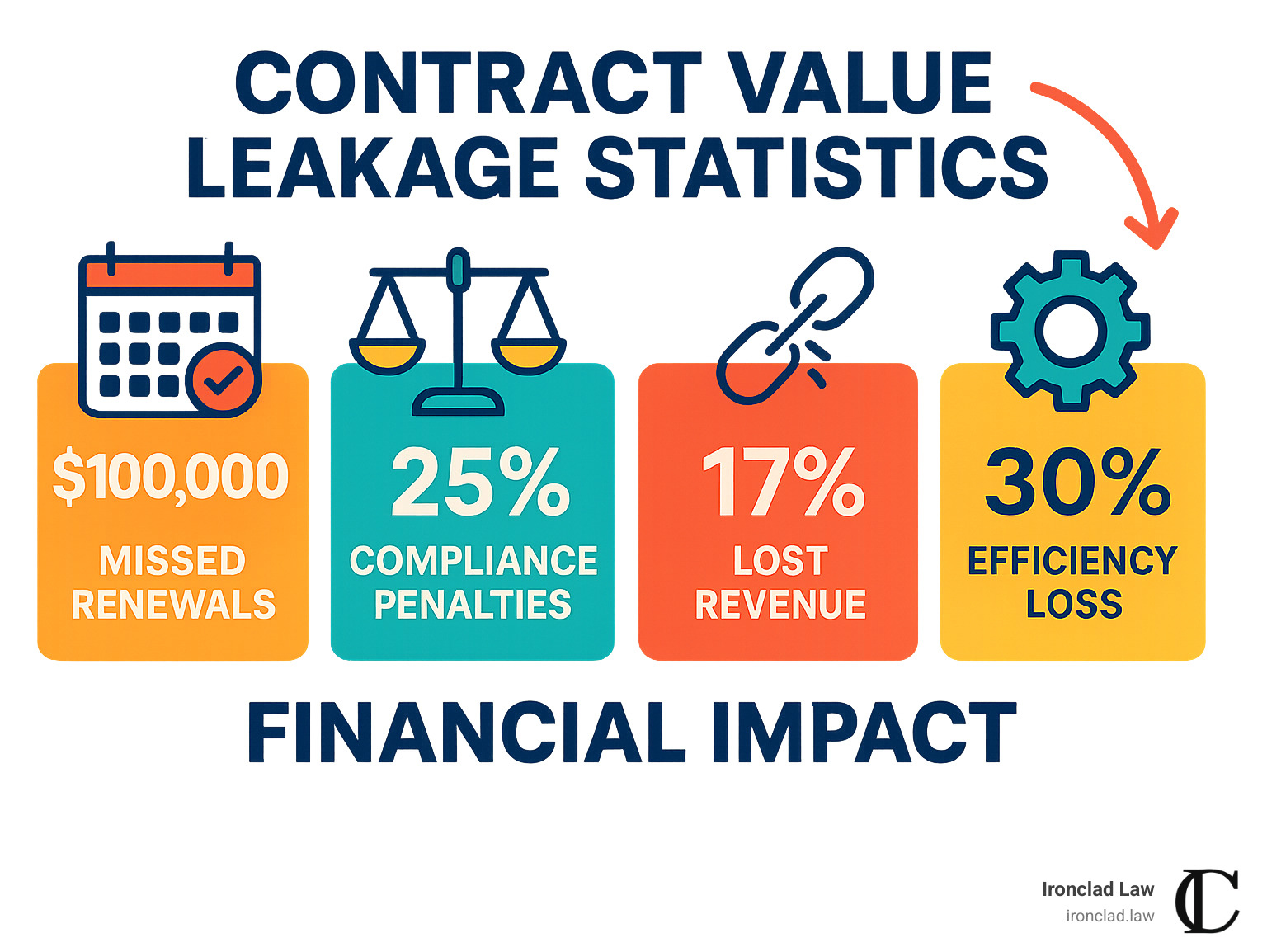
Let’s be honest—when contract management falls apart, the costs can be painful. Research from the International Association for Contract and Commercial Management (IACCM) shows that inadequate business contract management can drain up to 9% of your annual revenue. That’s money quietly slipping through the cracks due to missed entitlements, overlooked price increases, and obligations that nobody tracked.
Have you ever finded your company was still paying for services you stopped using months ago? This happens more often than you might think. Without proper tracking systems, contracts can auto-renew when they should be renegotiated or terminated, leading to thousands in unnecessary expenses.
Compliance violations represent another serious risk. Missing contractual or regulatory requirements can result in penalties, damaged reputation, and even legal action. And don’t underestimate the impact on business relationships—when obligations aren’t met, trust erodes quickly.
Many companies still struggle with inefficient, manual processes that consume valuable time better spent on strategic activities. When contract information is scattered across departments, institutional knowledge becomes fragmented, and valuable insights disappear into the organizational ether.
Benefits & Impact on the Bottom Line
The good news? When you implement effective business contract management, the benefits are both immediate and long-lasting.
Deal cycles accelerate dramatically—standardized templates and automated workflows can reduce contract creation time by up to 20% and slash approval time by over 80%. That means your team closes deals faster and starts realizing value sooner.
The cost savings alone often justify investing in better contract management. By identifying optimization opportunities, preventing unexpected expenses, and negotiating better terms, you’ll see direct improvements to your bottom line. Systematic tracking of obligations minimizes legal and operational risks, while centralized repositories give you clear visibility into all your agreements.
Perhaps most valuable is what I call the “No Surprises” approach to business relationships. When everyone knows exactly what’s expected and when it’s due, your partnerships become more productive and harmonious. This proactive mindset transforms contracts from reactive documents into powerful business tools.
The research is clear—according to World Commerce & Contracting, organizations with mature contract management processes experience fewer disputes, capture more value, and build stronger business relationships. The question isn’t whether you can afford good contract management; it’s whether you can afford to go without it.
The Contract Management Process: From Draft to Renewal
Let’s walk through the journey of a contract – from the moment someone says “we need an agreement” to the final handshake (or renewal). Understanding this process is like having a roadmap for your business contract management efforts.
Pre-Signature Activities in Business Contract Management
The journey begins when someone in your organization identifies the need for a contract. Maybe your sales team has a new client, or perhaps you need a vendor agreement. This “initiation phase” is where you’ll want to get clear on what you’re trying to accomplish and who needs to be involved.
Once you know what you need, it’s time for drafting. This is where having standard templates and pre-approved clauses becomes your best friend. Instead of reinventing the wheel each time, you can pull from your contract library and customize as needed. Trust me – your legal team will thank you!
Before sending anything to the other party, you’ll want your internal team to review the draft. This typically involves a bit of back-and-forth between departments – legal might flag a risky clause while finance weighs in on payment terms. Getting everyone aligned internally saves headaches later.
Now comes negotiation – often the most dynamic part of the process. This is where redlines fly back and forth as both parties work toward mutually acceptable terms. Good version control is absolutely essential here; without it, you might find yourself wondering “wait, which draft had that liability clause we liked?”
The final pre-signature step is approval. Depending on your organization, this might involve multiple levels of sign-off based on contract value or risk level. Having a clear approval workflow prevents bottlenecks and keeps things moving.

Signing & Post-Signature Activities in Business Contract Management
With approvals in hand, it’s time for execution – getting those signatures! Electronic signature tools have been a game-changer here, turning what used to be a days-long paper chase into a process that can happen in minutes.
Once the ink is dry (virtually or otherwise), implementation begins. This critical phase involves communicating obligations to everyone involved and ensuring systems are set up correctly. I’ve seen many great contracts fall apart simply because the right people weren’t informed about what needed to happen next.
Now comes the part that many organizations overlook – proper storage and organization. Your signed contract shouldn’t disappear into the digital equivalent of a filing cabinet, never to be seen again. Instead, it should live in a searchable repository where anyone with appropriate permissions can find it when needed.
The monitoring phase is where the real value of business contract management shines through. Are deliverables arriving on time? Are payments being processed correctly? Is everyone meeting their obligations? Staying on top of these questions helps prevent small issues from becoming big problems.
Regular performance reviews complete the active management phase. These check-ins help you determine whether the contract is delivering the expected value and identify opportunities for improvement.
Close-out, Renewal & Exit
As the contract approaches its end date, you’ll need to decide what happens next. This renewal assessment should start well before the expiration date – I typically recommend 60-90 days prior for most agreements. Look at performance data, current business needs, and market conditions to determine whether to renew, renegotiate, or walk away.
Throughout the contract’s life, you may need to make amendments as circumstances change. Keeping track of these changes ensures everyone is working from the same playbook.
If you decide not to renew, proper close-out procedures ensure a clean break. This includes fulfilling final obligations, returning any assets, and formally concluding the relationship.
Finally, take time to capture knowledge from the process. What worked well? What would you do differently next time? This institutional learning improves your business contract management process for future agreements.
At Ironclad Law, we’ve noticed that many organizations pour resources into getting contracts signed but then drop the ball on post-signature management. That’s like spending hours planning a road trip but then ignoring the map once you start driving! The real value comes from actively managing agreements throughout their entire lifecycle.
Best Practices, Tools & Software Features
When it comes to business contract management, success depends on having the right mix of people, processes, and technology working together. Let’s explore what really matters when building an effective system.
Choosing the Right Solution
Finding the perfect contract management solution doesn’t have to be overwhelming. Think of it like choosing a new home – you need the right features that fit your specific needs.
A truly effective system starts with a centralized repository – your single source of truth where every contract lives and can be easily found. No more digging through email threads or shared drives! This should come with powerful search capabilities so you can find what you need in seconds, not hours.
Template and clause libraries are game-changers for efficiency. They’re like having a trusted assistant who hands you the perfect starting document every time. These pre-approved templates ensure consistency while dramatically cutting down drafting time.
Look for systems with workflow automation that routes contracts to the right people at the right time. This eliminates those frustrating “waiting for approval” bottlenecks that can stall important deals.
E-signature integration has become non-negotiable in today’s business environment. It transforms what used to be a days-long paper chase into a smooth, same-day process.
We’ve seen clients transform their operations with tools that offer strong obligation management features. These automatically track important dates and deliverables, essentially acting as your contract memory so nothing falls through the cracks.
Don’t overlook the importance of user-friendly interfaces. The most powerful system in the world is worthless if your team avoids using it because it’s confusing or cumbersome.
At Ironclad Law, we’ve watched clients struggle with overly complex systems that end up gathering digital dust. The sweet spot is functionality that’s accessible enough for everyone who needs to use it.

Integrating Contract Management With Existing Workflows
For business contract management to truly shine, it needs to play nicely with your other business systems. Think of these integrations as building bridges between islands of information.
Connecting your contract system with your CRM creates a seamless flow from sales opportunity to signed agreement. Your sales team will thank you when they can generate contracts directly from customer information they’ve already entered.
ERP integration ensures that what’s promised in contracts aligns perfectly with your accounting processes. This connection helps prevent those awkward moments when finance and legal have different understandings of payment terms.
For organizations managing many employment agreements, HRIS integration brings harmony to your people processes. Employment contracts, contractor agreements, and confidentiality documents all stay synchronized with your human resources records.
Linking with procurement systems creates a holistic view of vendor relationships. You’ll be able to see not just what you’re buying, but all the terms that govern those purchases.
The goal is creating a connected ecosystem where information flows naturally between systems. This eliminates duplicate data entry and gives everyone a complete view of your business relationships.
Ensuring Compliance & Data Security
Contract management involves some of your company’s most sensitive information, so security isn’t just a nice-to-have—it’s essential.
Strong data protection measures should include encryption (both in transit and at rest), careful access controls, and detailed audit trails that show who viewed or changed what and when.
Your business contract management approach needs to address relevant regulations like GDPR, HIPAA, or industry-specific requirements. This isn’t just about avoiding fines—it’s about building trust with your customers and partners.
Standardization brings consistency to your contracting process. When everyone follows the same playbook, compliance becomes part of your routine rather than a last-minute scramble.
Being audit-ready means maintaining comprehensive records that tell the complete story of each agreement. This preparation pays dividends when auditors come knocking.
At Ironclad Law, we particularly recommend looking for solutions with SOC 2 certification. This independent verification confirms that a service provider follows strict information security policies—especially important for cloud-based systems where your contracts live outside your own walls.
For organizations needing more information about maintaining proper oversight, our Corporate Governance resources provide additional guidance. And if you need help reviewing your existing contracts for compliance issues, our Contract Review services offer expert analysis.
The best contract management system balances powerful features with practical usability. When done right, it transforms contracts from administrative paperwork into strategic business assets that protect your interests and drive your success.
Roles, Responsibilities & Metrics
Who owns your contracts? This might seem like a simple question, but in many organizations, the answer gets murky fast. Clear ownership and defined roles are the backbone of successful business contract management.
What Does a Contract Manager Do?
Contract managers are the unsung heroes of business relationships. They’re the ones making sure promises made are promises kept.
At its heart, a contract manager’s job is about creating clarity. They draft agreements that protect your interests while building bridges, not walls, with your partners. They review terms with a fine-tooth comb, ensuring everything aligns with your company policies and legal requirements.
When negotiations get tense, your contract manager steps in as the voice of reason. They track changes, document discussions, and help find that sweet spot where both parties feel good about moving forward. Think of them as translators between legal language and business objectives.
Risk assessment is another crucial part of the role. Good contract managers don’t just spot potential problems—they work with stakeholders to develop practical solutions before issues arise. They’re constantly asking “what if?” so you don’t have to.
Once the ink is dry, contract managers shift into performance monitoring mode. They track deliverables, deadlines, and compliance requirements, giving you peace of mind that nothing falls through the cracks. They’re also your relationship managers, serving as the go-between for internal teams and external partners.
Behind the scenes, they’re continuously refining processes based on what works and what doesn’t. They maintain your contract repository and ensure data accuracy, creating a reliable system of record for your business commitments.
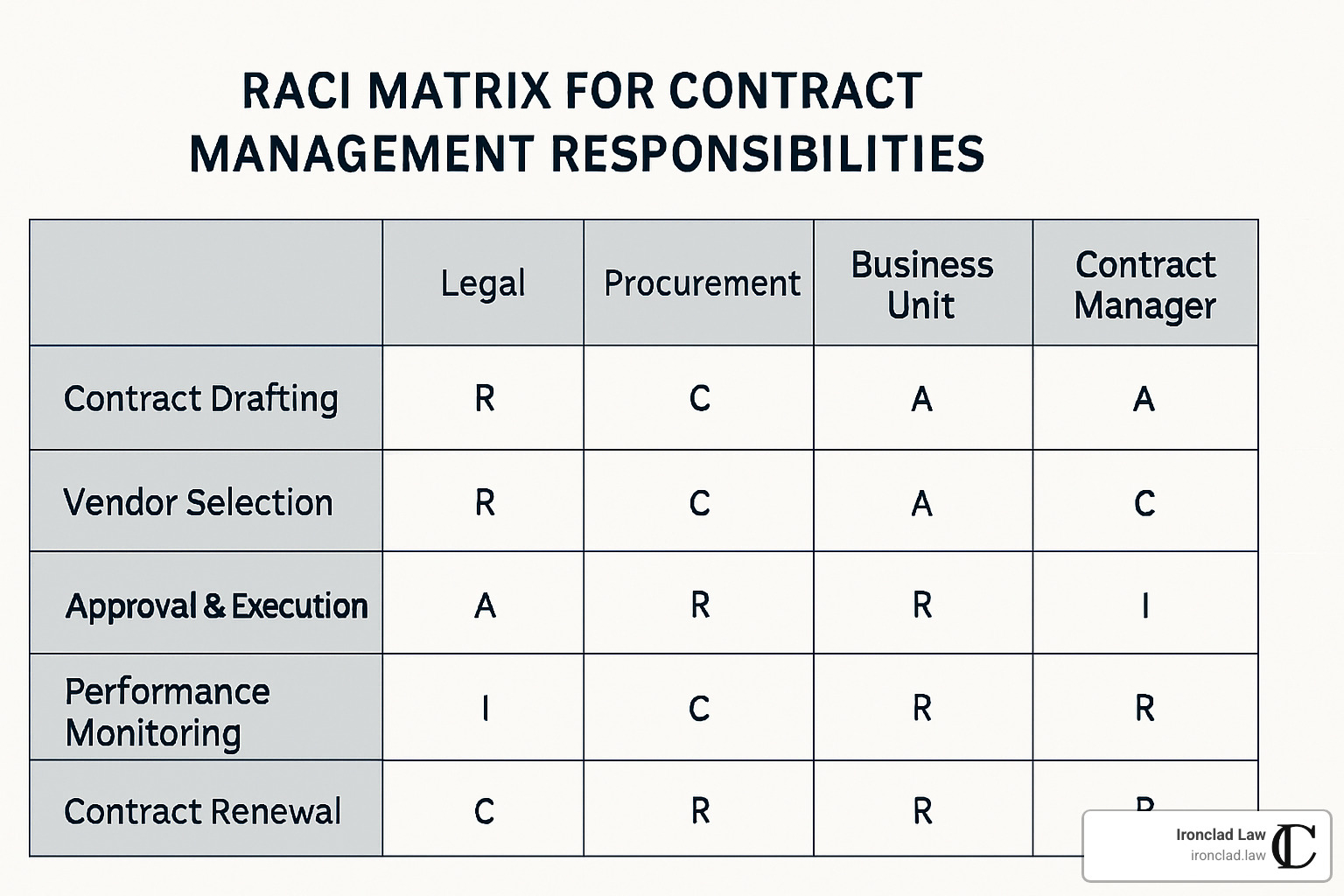
In smaller companies, these responsibilities might be shared across legal, procurement, and business units. Larger organizations often invest in dedicated contract management teams or centers of excellence. Either way, having clear ownership prevents the all-too-common “not my job” scenario when contract issues arise.
Measuring Success of Business Contract Management
“What gets measured gets managed” couldn’t be more true for contract management. Without clear metrics, it’s impossible to know if your efforts are paying off.
Start with cycle time—how long does it take from contract request to execution? Breaking this down by stage helps identify bottlenecks. I once worked with a client who finded their legal review was efficient, but internal approvals were taking weeks. This insight alone helped them shave 40% off their contract processing time.
Compliance rate matters too. What percentage of your contracts meet all policy and regulatory requirements? This isn’t just about avoiding trouble—it’s about building a reputation for reliability.
Don’t overlook risk reduction metrics. How many potential issues were identified and mitigated before signing? These prevented problems rarely make headlines, but they’re often where the real value lies.
The financial impact of good contract management shows up in multiple ways: cost savings through better terms, avoided penalties, and process efficiencies; value capture through protected or improved revenue; and renewal rates that reflect strong, continuing relationships.
User adoption is a telling metric—what percentage of contracts flow through your official process and system? Low adoption usually signals that your process is too cumbersome or doesn’t add enough value.
Finally, track dispute resolution—how many contract disputes arise, and how quickly are they resolved? Fewer disputes and faster resolutions indicate clearer contracts and better relationship management.
At Ironclad Law, we help clients establish baseline metrics before implementing new business contract management processes. This before-and-after comparison lets you demonstrate concrete improvements and ROI to leadership. After all, contract management shouldn’t be a cost center—it should be a strategic advantage that protects and improves your bottom line.
Frequently Asked Questions about Business Contract Management
What are the basic stages of the contract lifecycle?
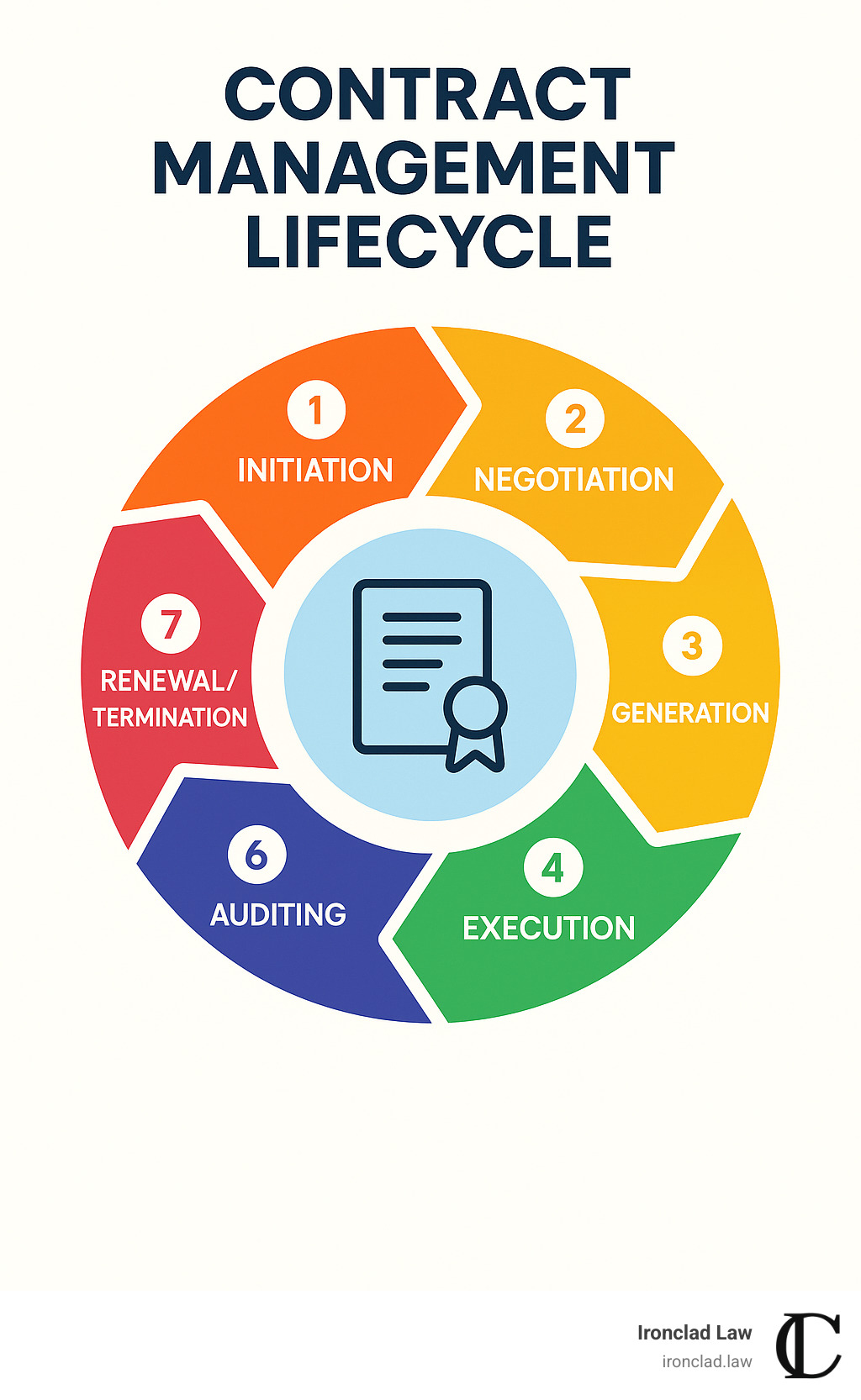
When clients ask me about contract basics, I often use the “seven stages” framework to help them visualize the journey from idea to completion. Think of it as the life story of your agreement:
It begins with initiation – that moment when you realize “we need this in writing” and start defining what you need. Next comes drafting, where you transform those requirements into actual contract language. This flows naturally into negotiation, often the most dynamic stage as you and your counterparty find middle ground on terms.
Once everyone’s happy with the language, you’ll move to approval, gathering those important internal sign-offs (this is where many contracts get stuck!). Execution follows when all parties sign, breathing legal life into your agreement. But signing is just the halfway point – management is where the real work happens, as you monitor performance and ensure everyone’s keeping their promises.
Finally, you’ll reach a crossroads with renewal or termination, deciding whether to continue the relationship, adjust terms, or part ways. Each of these stages requires different skills and tools, but they all work together in effective business contract management.
How can small businesses start with limited resources?
I’ve worked with many small businesses who feel overwhelmed by contract management. The good news? You don’t need enterprise-level resources to get started. Here’s my practical advice:
Begin with creating consistency. Build a simple library of template agreements for your common scenarios – this alone will save countless hours of reinventing the wheel. Then establish a central place for your contracts, even if it’s just a well-organized shared drive with clear naming conventions (ContractName_Company_ExpirationDate works well).
Track your key dates and obligations in a spreadsheet until you’re ready for dedicated software. Focus your energy on high-value agreements first – the ones with the greatest financial impact or risk exposure. Most small businesses already have tools like Microsoft 365 or Google Workspace that include basic document management features you can adapt for contract tracking.
And remember, you don’t have to do it all yourself. Many of our small business clients at Ironclad Law find that outsourcing their contract management provides expert support without the overhead of hiring full-time staff. The key is starting with a structured approach that can grow with your business.
When should you hire or outsource a contract manager?
There are clear signals that tell you it’s time to bring in dedicated contract management help. Watch for these five indicators:
First, volume increases – when you’re juggling more than 20-30 active contracts simultaneously, the administrative burden becomes significant. Second, complexity grows – as your agreements involve more sophisticated terms, regulatory requirements, or international considerations, specialized knowledge becomes essential.
Pay attention when efficiency suffers – if contract processes are causing delays or business friction, that’s a red flag. Similarly, when compliance concerns arise and you need to ensure adherence to industry regulations or standards, professional management becomes critical. Finally, consider whether revenue is at risk – if you’re experiencing financial leakage due to missed obligations or renewal opportunities.
At Ironclad Law, we offer flexible contract management solutions that scale with your needs. Many clients find that outsourcing provides the perfect middle ground – expert support without the commitment of a full-time hire. This approach works particularly well for growing businesses whose contract needs are still evolving.
Conclusion
Effective business contract management isn’t just a nice-to-have in today’s business landscape—it’s become essential for protecting your company’s interests, relationships, and bottom line. When done right, it transforms contracts from dusty paperwork into strategic assets that drive your business forward.
Throughout this guide, we’ve explored how structured contract processes directly impact revenue protection, risk management, and operational efficiency. The difference between haphazard contract handling and systematic management can literally mean thousands or even millions in saved revenue—remember that 9% figure we mentioned earlier? That’s real money staying in your business when contracts are managed properly.
I’ve seen how companies evolve their contract practices. Some start with simple spreadsheets and shared folders, while others implement sophisticated CLM systems. The key isn’t necessarily having the fanciest technology, but rather establishing clear processes where business contract management becomes an intentional, strategic function rather than an afterthought.
The “No Surprises” principle remains your north star—when everyone involved knows exactly what’s expected and when deliverables are due, your business relationships naturally strengthen. Contracts become enablers of success rather than sources of frustration or litigation.
Improvement is a journey, not a destination. Start by focusing on your highest-risk or highest-value agreements, standardize your templates, establish basic tracking mechanisms, and build from there. As your processes mature, you can incorporate more sophisticated tools and metrics to drive continuous improvement.
At Ironclad Law, we bring both legal expertise and practical business sense to the table. We’ve helped countless New York businesses implement contract management solutions that balance compliance needs with operational realities. While we’re known for aggressive litigation when necessary, we much prefer helping clients avoid disputes altogether through proactive contract management.
Whether you need comprehensive contract review services or ongoing support through our Outsourced General Corporate Counsel Service, we’re here to help you manage agreements with confidence. We understand that contracts aren’t just legal documents—they’re the foundation of your most important business relationships.
When you’re ready to take your business contract management to the next level, reach out. Together, we’ll transform your contracts from potential liabilities into powerful tools for business growth and success.