
You have 0 items in your cart

Understanding Business Regulatory Compliance Fundamentals
Business regulatory compliance is the process of adhering to laws, regulations, policies, and standards set by government authorities and regulatory bodies that apply to your organization’s operations.
Quick Answer for Business Regulatory Compliance:
- Definition: Following external laws and regulations imposed by government agencies
- Core Areas: Financial reporting, data privacy, workplace safety, environmental standards, anti-corruption
- Key Benefits: Avoid fines, protect reputation, maintain business continuity, build stakeholder trust
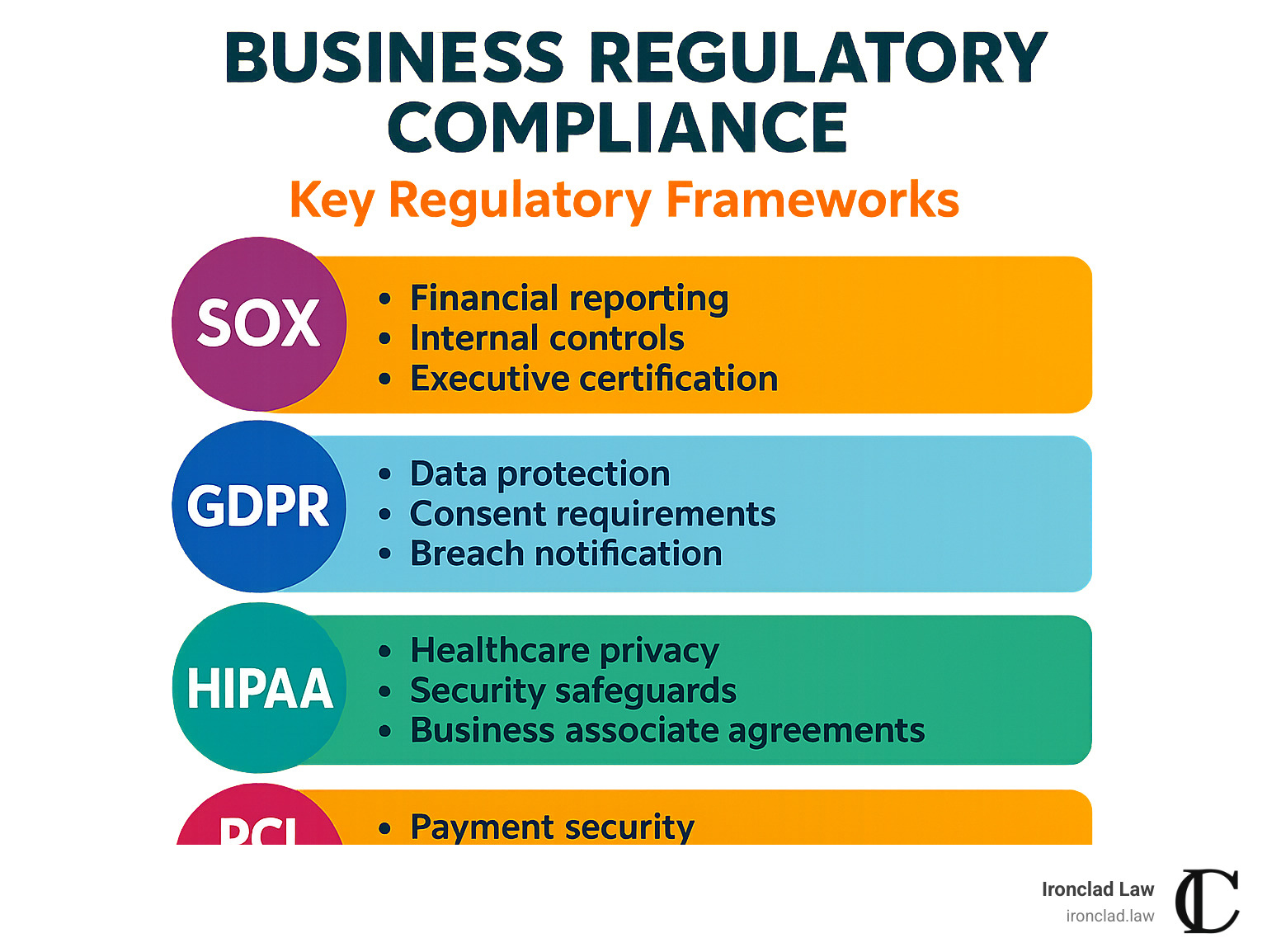
- Common Frameworks: SOX, GDPR, HIPAA, PCI DSS, OSHA standards
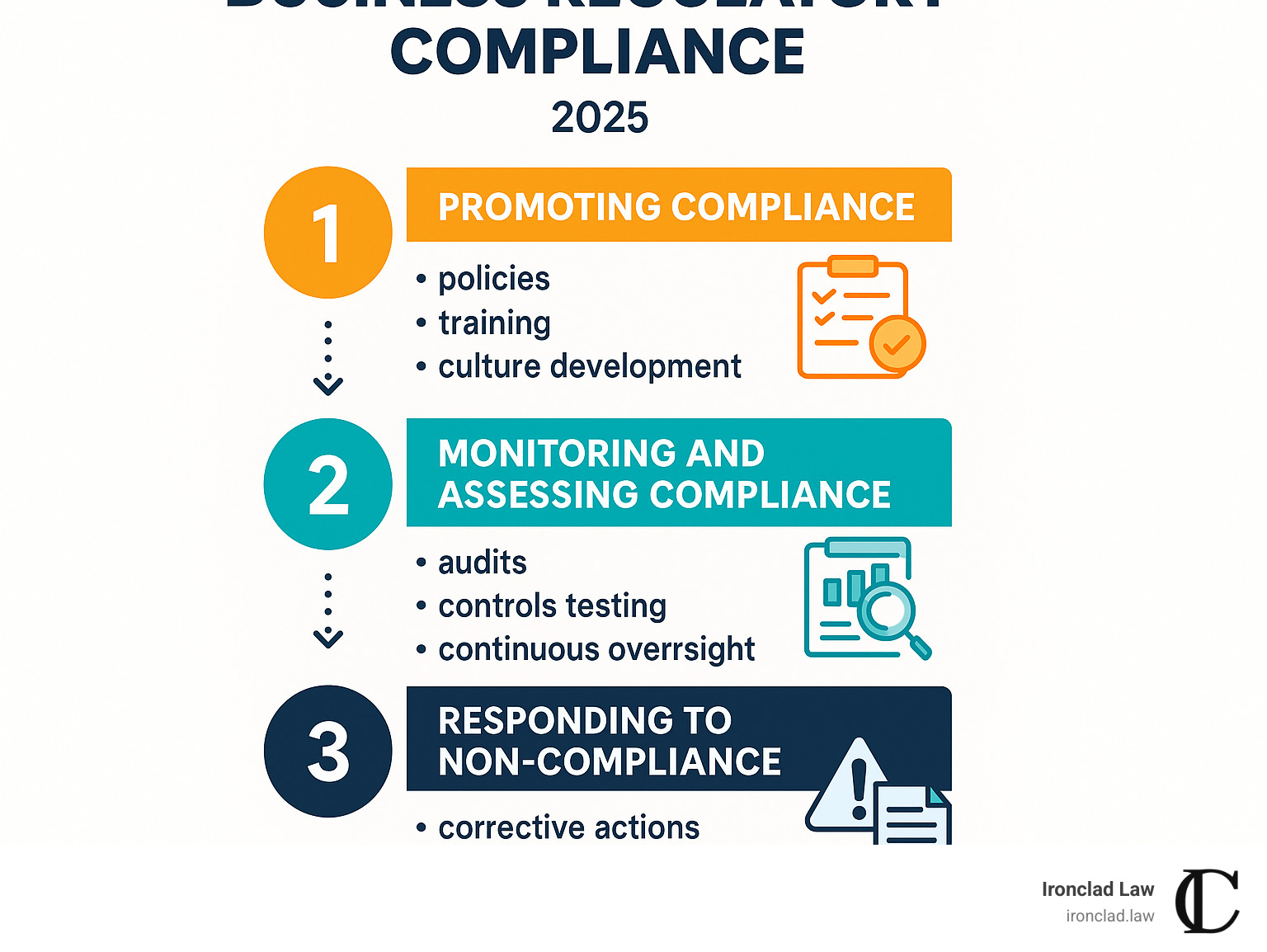
- Implementation: Risk assessment → policy development → employee training → ongoing monitoring
The stakes couldn’t be higher. Organizations with robust compliance programs experience fewer regulatory incidents and recover more quickly when issues arise, while the cost of non-compliance can devastate businesses through massive fines, operational shutdowns, and permanent reputational damage.
Consider this reality: GDPR violations can trigger fines up to €20 million or 4% of annual global revenue – whichever is greater. Wells Fargo paid $1.7 billion in fines and over $2 billion to customers for compliance failures.
Yet compliance isn’t just about avoiding penalties. 64% of organizations now focus on enhancing regulatory compliance assessments because smart leaders recognize compliance as a competitive advantage that builds customer trust, attracts investors, and creates operational efficiency.
I’m Michael Hurckes, Managing Partner at Ironclad Law, where I’ve spent years helping organizations steer complex business regulatory compliance challenges across capital markets, financial services, and corporate governance.
Why Regulatory Compliance Matters
The regulatory world has changed dramatically. Since 2020, regulatory requirements have grown by 35%. This reflects how society now expects companies to be accountable for their environmental, social, and governance practices.
The numbers are staggering: IBM’s research shows that data breach costs hit $4.45 million globally in 2023 – that’s a 15% jump in just three years. Data compromise incidents surged 78% between 2022 and 2023 alone.
The financial penalties tell only part of the story. When T-Mobile suffered a breach exposing over 77 million people’s data, they faced a $350 million settlement. General Electric’s compliance failures cost them $200 million in SEC penalties. Deutsche Bank faced a $150 million penalty from New York’s Department of Financial Services.
But the real story includes the operational chaos, customer defections, damaged employee morale, and years spent rebuilding trust that follow major compliance failures.
Key Benefits for Organizations
Smart organizations view business regulatory compliance as a strategic advantage rather than just another cost.
Competitive advantage becomes real when prospective customers expect vendors to prove their compliance before signing contracts. A solid compliance program sets you apart in competitive situations, especially for government contracts or large enterprise deals.
Operational efficiency emerges naturally from well-designed compliance programs. When you’re forced to document processes and establish clear accountability, you reduce errors, improve decision-making, and create scalable business practices.
Customer loyalty grows from trust. Organizations that proactively communicate their compliance commitments and consistently demonstrate adherence build deeper customer relationships.
Risks & Consequences of Non-Compliance
The consequences of regulatory failures stretch far beyond financial penalties. GDPR’s €20 million maximum fine or 4% of annual global turnover has fundamentally changed how organizations approach data privacy.
Legal liability multiplies when compliance failures trigger lawsuits from customers, shareholders, and business partners. These civil actions can dwarf regulatory fines and drag on for years.
Business suspension becomes a real threat because regulators have broad authority to suspend operations, revoke licenses, or bar organizations from government contracts.
Reputational damage spreads faster than ever in our connected world. Regulatory failures become public immediately, social media amplifies negative news, and competitors quickly exploit compliance scandals.
The Wells Fargo case perfectly illustrates how compliance failures cascade. What began with improper sales practices led to multiple regulatory investigations, billions in fines, congressional hearings, and years of improved regulatory oversight that continue to impact the company’s operations today.
Navigating Business Regulatory Compliance Requirements
Understanding business regulatory compliance requirements can feel overwhelming at first glance. The landscape shifts constantly, with new regulations appearing while existing ones evolve. But once you understand the underlying patterns, building a comprehensive compliance program becomes much more manageable.
Think of regulatory compliance as operating across multiple layers simultaneously. Financial regulations like Sarbanes-Oxley create the foundation for corporate governance. Data privacy laws like GDPR establish how you handle personal information. Industry-specific frameworks like HIPAA govern specialized sectors, while payment standards like PCI DSS apply to virtually any business accepting credit cards.
The real challenge? Most organizations don’t fall under just one regulatory framework. A healthcare technology company might juggle HIPAA for patient data, PCI DSS for payment processing, SOX for financial reporting (if publicly traded), and GDPR for European customers.
Industry-Specific Obligations
Financial services organizations face perhaps the most complex regulatory maze. The Dodd-Frank Act spans thousands of pages and created entirely new regulatory agencies. Anti-money laundering (AML) requirements demand sophisticated transaction monitoring systems. Know Your Customer (KYC) obligations require extensive due diligence on every customer relationship.
Healthcare starts with HIPAA as the baseline for patient privacy. Medical device companies must steer FDA regulations for product approvals. Healthcare providers handling controlled substances face DEA requirements with strict tracking obligations.
Manufacturing companies deal with OSHA workplace safety standards that apply universally. EPA environmental regulations govern everything from air emissions to waste disposal. Product safety requirements vary by industry and product type.
Geography & Extraterritorial Reach
Modern regulations don’t respect borders. GDPR applies to any organization processing personal data of EU residents, regardless of where your company is headquartered. The Foreign Corrupt Practices Act (FCPA) applies to U.S. companies operating internationally and foreign companies with U.S. business connections.
United States operates with federal regulations providing the baseline, but state laws add significant complexity. California’s Consumer Privacy Act (CCPA) creates data privacy obligations for companies serving California residents, even if they’re based elsewhere.
European Union has become the global trendsetter in regulatory development, particularly around data privacy, environmental protection, and digital markets.
Essential Laws & Frameworks
Sarbanes-Oxley Act (SOX) applies to all publicly traded U.S. companies and creates stringent corporate governance requirements. CEOs and CFOs must personally certify financial statements under penalty of up to $5 million in fines and 20 years imprisonment.
General Data Protection Regulation (GDPR) spans 88 pages of detailed requirements for anyone handling personal data of EU residents. Key obligations include establishing lawful basis for processing, honoring data subject rights, and breach notification within 72 hours.
Health Insurance Portability and Accountability Act (HIPAA) protects patient health information through privacy rules, security rules, and breach notification requirements.
Payment Card Industry Data Security Standard (PCI DSS) applies to any organization that stores, processes, or transmits credit card information.
Building an Effective Compliance Program
Building a business regulatory compliance program that actually protects your organization takes more than downloading templates and checking boxes. It requires weaving compliance into the fabric of how your company operates every single day.
Your senior executives set the tone for everything that follows. When a CEO genuinely prioritizes compliance – allocating real resources, participating in training, and holding people accountable – employees notice.
Every effective compliance program needs someone driving the bus. A dedicated compliance officer serves as your central coordinator, monitoring regulatory changes, managing incident responses, and ensuring nothing falls through the cracks.
Your policies form the backbone of daily compliance operations. Generic policies copied from the internet rarely work in the real world. Effective policies reflect your specific business model, address your actual risks, and give employees clear guidance they can follow in their daily work.
For organizations seeking comprehensive support in building robust compliance programs, our compliance services provide the expertise and resources needed to steer complex regulatory requirements while maintaining operational efficiency.
Core Components & Best Practices
Risk assessment forms the foundation of everything else you’ll build. You need to understand which regulations apply to your business, where your current gaps exist, and which issues pose the biggest threats.
Controls mapping ensures you’re covering all your bases without duplicating efforts. Map specific controls to regulatory requirements and business processes so you can demonstrate comprehensive coverage.
Continuous monitoring keeps your program current and effective. Static compliance programs become obsolete quickly as regulations change and your business evolves.
Remediation workflows provide clear procedures for handling compliance issues when they arise. Include specific timelines, responsibility assignments, and escalation procedures.
Employee Training & Change Management
People drive compliance behavior, not policies. Your training programs must address the real barriers that prevent employees from following procedures in their daily work.
Role-based training modules focus on what each employee actually needs to know. Your sales team faces different compliance challenges than your IT staff or finance professionals.
Reporting channels must be accessible and trustworthy. Employees need multiple ways to report concerns, including anonymous options that protect them from potential retaliation.
Whistleblower protection encourages employees to speak up when they see problems. These protections must be clearly communicated and consistently enforced to maintain credibility.
Technology & Tools for Continuous Compliance
Managing business regulatory compliance manually is like trying to count raindrops in a thunderstorm – theoretically possible, but practically impossible. The sheer volume of regulatory requirements has made technology solutions essential for any organization serious about maintaining compliance.
Regulatory Technology (RegTech) has evolved from basic document management to sophisticated platforms that can predict compliance risks before they materialize. Governance, Risk, and Compliance (GRC) platforms centralize all your compliance activities under one roof.
What makes modern compliance technology truly powerful is automation. These systems can automatically collect evidence of your compliance activities, generate reports for regulatory examinations, and alert you to potential issues before they become violations.
Artificial intelligence monitoring represents the cutting edge of compliance technology. AI systems analyze vast amounts of data to spot patterns that humans might miss – like detecting unusual transaction patterns that could indicate money laundering.
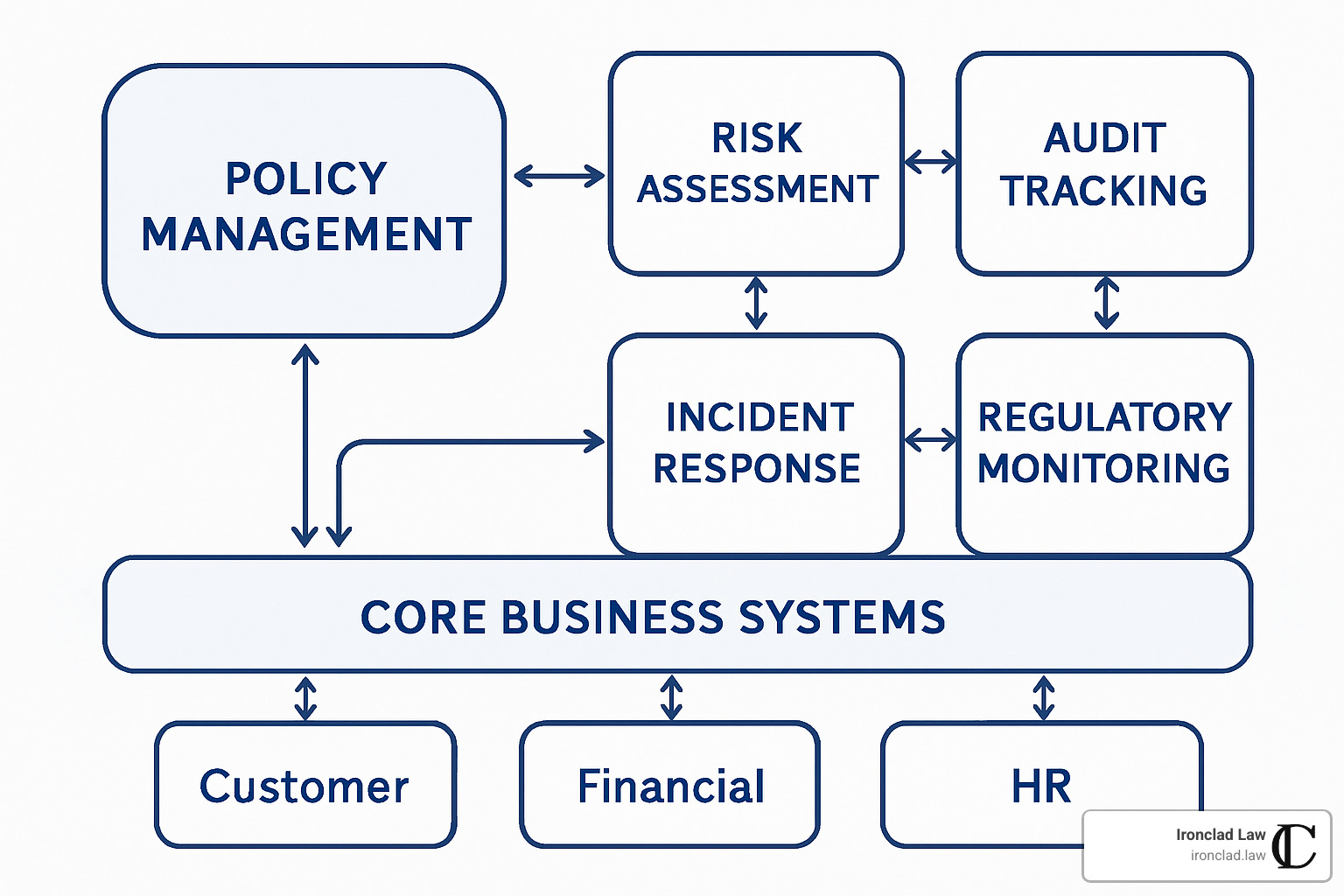
The research from SSRN confirms what we’ve seen in practice – organizations using compliance technology experience fewer violations and respond more effectively when issues arise.
For organizations looking to implement these solutions effectively, our compliance consultants help bridge the gap between regulatory requirements and practical technology implementation.
Selecting the Right Solutions
Choosing compliance technology requires looking at scalability – you need something that fits your current needs but can handle where you’re going. Integration separates good compliance technology from great compliance technology. Systems that don’t talk to each other create more work, not less.
Cost-benefit analysis requires looking beyond the sticker price. A single regulatory violation can cost more than years of technology licensing fees.
Measuring Program Effectiveness
You can’t manage what you don’t measure. Key Performance Indicators (KPIs) help you understand whether your compliance program actually works or just looks good on paper.
Maturity models provide a roadmap for compliance program development. Most organizations start in reactive mode – scrambling to respond when violations occur. The goal is reaching proactive compliance where you prevent violations through systematic controls.
Independent assessments provide the external validation that regulators find credible. These assessments identify blind spots that internal teams might miss and provide objective evidence of your compliance efforts during regulatory examinations.
Responding to Breaches & Maintaining Good Standing
Nobody wants to face a compliance breach, but even the most carefully managed business regulatory compliance programs sometimes encounter violations. The real test isn’t whether problems occur – it’s how quickly and effectively you respond when they do.
The organizations that emerge stronger from compliance incidents share one common trait: they had clear response procedures in place before trouble struck. When you’re dealing with regulatory deadlines measured in hours, not days, there’s no time to figure out your response strategy on the fly.
Think about GDPR’s 72-hour breach notification requirement. That countdown starts ticking the moment your organization becomes aware of a potential breach, not when you finish investigating it.
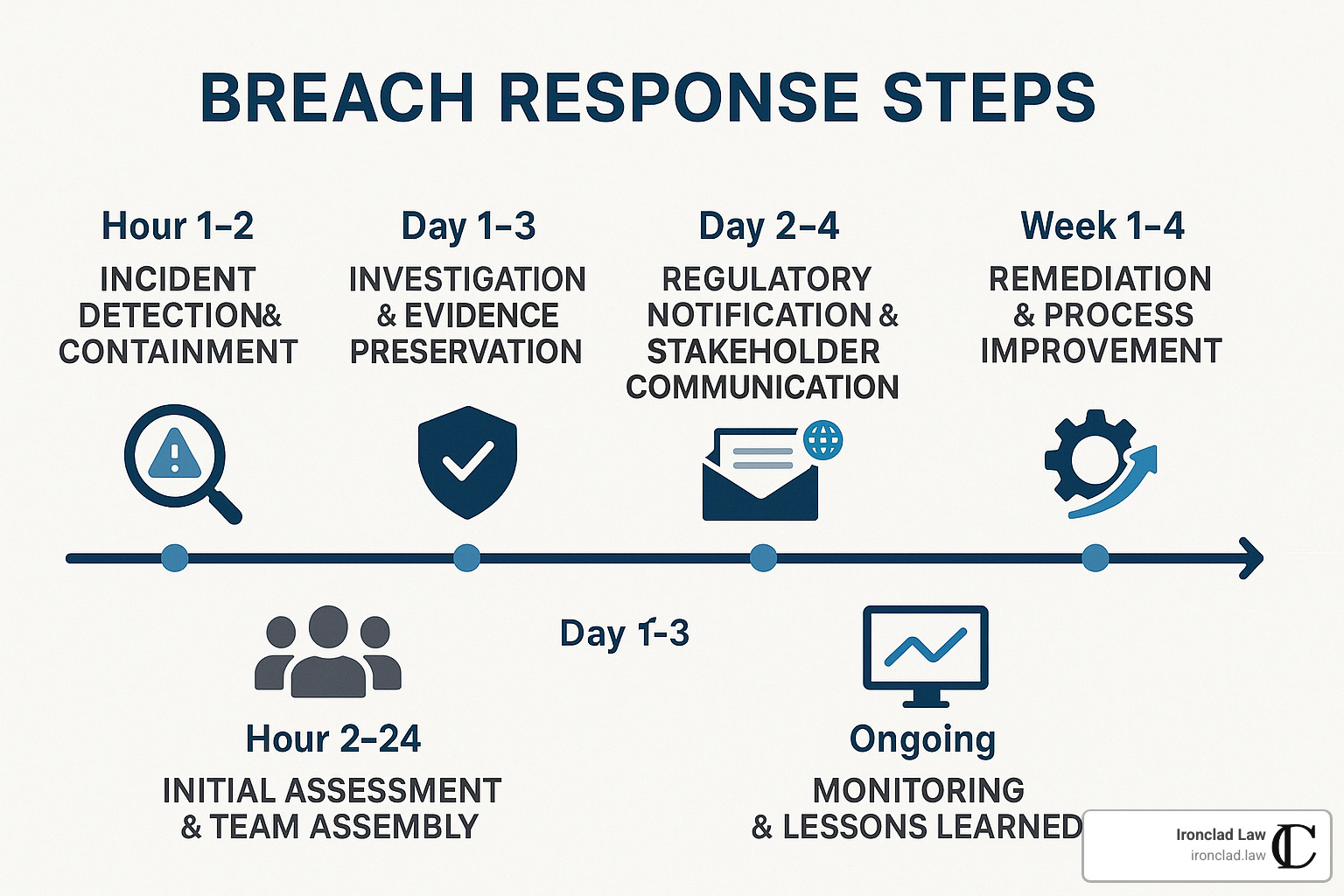
The best incident response plans spell out exactly who does what, when they do it, and how they communicate with each other. Immediate containment measures stop the bleeding while investigation protocols preserve evidence and protect attorney-client privilege.
When organizations face serious regulatory investigations or enforcement actions, they need counsel who understands that compliance failures are business problems requiring business solutions. Our legal risk management approach combines aggressive advocacy with practical strategy to protect client interests while working toward resolution with regulatory authorities.
Steps After Non-Compliance or Breach
Containment comes first, questions come later. Your immediate priority is stopping ongoing violations and preventing additional harm. Document everything you do – regulators want to see evidence of prompt, decisive action.
Root-cause analysis separates organizations that learn from their mistakes from those that repeat them. Surface-level fixes rarely prevent future problems.
Regulator engagement requires delicate balance. Proactive communication with regulatory authorities often produces better outcomes than waiting for regulators to find violations independently.
Public communications about compliance incidents demand coordination between legal, compliance, and communications teams.
Continuous Improvement Cycle
The organizations that thrive after compliance incidents treat them as expensive learning opportunities rather than just problems to solve. Lessons learned from each incident should be documented, shared across the organization, and incorporated into training programs and policy updates.
Policy updates often reveal the most valuable insights from compliance incidents. Violations frequently expose gaps or ambiguities in existing policies.
External audits provide objective assessment of compliance program improvements and validate internal remediation efforts.
Frequently Asked Questions about Business Regulatory Compliance
What is the difference between regulatory and corporate compliance?
Regulatory compliance means following the rules that government agencies impose on your business. These aren’t suggestions – they’re legal requirements with real consequences.
Think of regulatory compliance as the non-negotiable baseline. When the SEC requires SOX financial reporting, when GDPR demands data privacy protections, or when OSHA sets workplace safety standards, you don’t get to choose whether to comply.
Corporate compliance casts a much wider net. It includes all those regulatory requirements plus the internal policies and standards your organization creates for itself. Your employee handbook, code of conduct, internal controls, and governance procedures all fall under corporate compliance.
The smart approach is building corporate compliance programs that exceed regulatory minimums. This creates a buffer zone that protects against inadvertent regulatory violations.
How can small businesses afford ongoing compliance?
We understand this concern because we work with businesses of all sizes. The reality is that compliance costs money, but non-compliance costs far more.
Start with your biggest risks first. Don’t try to tackle every regulatory requirement simultaneously. If you process credit cards, focus on PCI DSS compliance before worrying about other frameworks.
Technology is your friend here. Cloud-based compliance solutions have democratized access to sophisticated compliance tools. Many platforms offer pricing that scales with your business size.
Industry associations offer tremendous value for small businesses. Your trade association probably provides compliance templates, training programs, and group purchasing opportunities that reduce individual costs.
Outsourcing can be surprisingly cost-effective. Many small businesses find that hiring compliance consultants or service providers costs less than building internal capabilities.
What international standards future-proof a compliance program?
ISO 37301 for Compliance Management Systems provides the gold standard framework for building systematic compliance capabilities. Organizations that implement this standard develop processes for identifying regulatory requirements, assessing compliance risks, and maintaining ongoing compliance monitoring.
ISO 27001 for Information Security Management addresses data security requirements that appear in virtually every modern regulation. Whether you’re dealing with GDPR, HIPAA, or state data privacy laws, robust information security management supports compliance across multiple frameworks.
These standards work together synergistically. Organizations that implement multiple standards often find that compliance becomes more efficient over time because the frameworks reinforce each other.
Conclusion
Business regulatory compliance isn’t just about following rules anymore – it’s become the foundation that separates thriving companies from those that struggle to survive. The businesses winning in today’s market understand something their competitors don’t: compliance creates competitive advantages that compound over time.
Think about it this way. While your competitors worry about regulatory surprises, your organization operates with confidence. While they scramble to respond to enforcement actions, you’re building customer trust and investor confidence.
The regulatory world keeps changing, and it’s not slowing down. New rules around artificial intelligence are coming. Environmental regulations are expanding. Data privacy requirements continue evolving. Organizations that build flexible compliance programs using proven frameworks will adapt quickly to these changes, while others get left behind dealing with yesterday’s problems.
At Ironclad Law, we’ve seen both sides of this equation. We’ve helped companies build bulletproof compliance programs that support business growth. We’ve also defended organizations facing regulatory investigations and enforcement actions. The difference between these two scenarios often comes down to one thing: taking compliance seriously before problems arise.
Here’s what we’ve learned from years of regulatory work: effective compliance requires more than good intentions. It demands strategic thinking about your specific risks. It requires aggressive advocacy when regulators come knocking. Most importantly, it needs practical solutions that work in the real world of business operations.
Whether you’re starting from scratch or fixing existing problems, the approach remains the same. Start with a thorough risk assessment. Build policies that people can actually follow. Train employees on what matters for their specific roles. Monitor what’s working and fix what isn’t. Document everything properly. And when issues arise – because they will – respond quickly and comprehensively.
The math is simple: proactive compliance always costs less than regulatory failures. The $4.45 million average cost of data breaches. The €20 million GDPR fines. The operational shutdowns. The reputation damage that takes years to repair. These costs dwarf any investment in building strong compliance programs.
For organizations ready to turn compliance into a competitive advantage, our regulatory counsel and compliance services provide the expertise and assertive advocacy needed to succeed. We don’t just help you follow rules – we help you build systems that support long-term business success while protecting against regulatory risks.
The reality is straightforward: business regulatory compliance isn’t about perfect rule-following. It’s about building organizations that consistently demonstrate good faith efforts to meet their obligations while achieving business objectives. The companies that master this balance will dominate their markets while competitors struggle with regulatory challenges.
Your compliance program should work as hard for your business as you do. When built right, it becomes an asset that pays dividends for years to come.