
You have 0 items in your cart

When Life’s Final Act Needs a Legal Director
Estate administration lawyer NYC services become essential when a loved one passes away in New York City, leaving behind assets that need proper legal handling through the complex Surrogate’s Court system.
Quick Answer for NYC Estate Administration:
- Probate required: Assets over $30,000 in decedent’s sole name
- Court jurisdiction: NYC Surrogate’s Court in the borough where decedent lived
- Key deadlines: 90 days for asset inventory, 7 months for creditor claims
- Timeline: Typically 12-18 months from start to finish
- When to hire a lawyer: Complex estates, disputes, real estate sales, or out-of-state heirs
The stakes are high in estate administration. One misstep can lead to personal liability, family conflicts, or costly delays.
Why This Matters Now
NYC estate administration involves Surrogate’s Court procedures, creditor notifications, asset valuations, and potential challenges from beneficiaries or creditors. The city’s unique requirements – from publishing creditor notices to handling cooperative board approvals for inherited apartments – demand local expertise.
I’m Michael Hurckes, Managing Partner at Ironclad Law, where I’ve helped families steer complex estate matters with my background in litigation and regulatory compliance.
Estate Administration 101: What It Is & Why It Matters in New York City
Estate administration is the legal process that handles someone’s final affairs after they pass away in NYC – from collecting assets to paying debts and distributing what remains to beneficiaries.
In NYC, this process happens under the supervision of the Surrogate’s Court. Each borough has its own court that oversees estate matters. The legal framework is New York’s Estates, Powers & Trusts Law (EPTL). Following these rules matters because fiduciaries can face breach of duty lawsuits, fines, or even criminal prosecution if they mismanage estate assets.
What Goes Through Estate Administration?
Probate assets include solely owned bank accounts, real estate titled only in the decedent’s name, stocks without transfer-on-death designations, personal property, and life insurance policies naming the estate as beneficiary.
Assets that skip this process include jointly held property, retirement accounts with named beneficiaries, and assets held in trust.
Probate vs. Administration—The Legal Fork in the Road
Probate happens when someone dies with a valid will. The court validates the will and appoints the executor, who receives Letters Testamentary.
Administration occurs when someone dies without a will or with an invalid will. The court appoints an administrator who receives Letters of Administration and follows New York’s intestacy laws.
For estates worth less than $30,000, New York offers a simplified “small estate” process.
The Critical Seven-Month Creditor Period
New York law creates a seven-month window for creditors to file claims after the executor publishes a notice in a local newspaper. This isn’t optional and must be completed within a reasonable time after appointment.
| Aspect | Probate (With Will) | Administration (No Will) |
|---|---|---|
| Legal Authority | Executor named in will | Administrator appointed by court |
| Distribution | According to will terms | According to NY intestacy laws |
| Court Document | Letters Testamentary | Letters of Administration |
| Bond Requirement | Often waived if will specifies | Usually required |
The Role of the Surrogate’s Court
NYC’s Surrogate’s Courts operate in each borough: Manhattan, Brooklyn, Queens, Bronx, and Staten Island. Where you file depends on where the deceased person lived.
These courts have serious oversight authority and can compel detailed accountings, remove fiduciaries, and impose sanctions. Every executor must publish creditor notice and file an asset inventory within 90 days.
For detailed court procedures, the New York Surrogate’s Court guide provides essential resources.
Do You Need an Estate Administration Lawyer NYC?

While the $30,000 threshold triggers formal probate requirements, the real question isn’t about dollar amounts—it’s about complexity, family dynamics, and your comfort level with legal procedures.
NYC real estate ownership alone can justify hiring legal help. Selling a co-op apartment involves board approvals and transfer requirements that can derail administrations. Family disputes turn simple matters into complex battlegrounds quickly. Professional executors often need legal guidance when dealing with taxable estates or creditor claims.
Top Scenarios Requiring an Estate Administration Lawyer NYC
Taxable estates exceeding New York’s $6.94 million threshold require federal and state estate tax returns and strategic planning. Real estate sales involve more than just listing properties – NYC’s rental laws and co-op requirements create unexpected complications.
Cryptocurrency and digital assets present new challenges in locating wallets, recovering passwords, and proper valuation. Missing beneficiaries trigger kinship proceedings requiring extensive documentation. Breach of fiduciary duty claims demand immediate legal attention.
For comprehensive assistance, our Estate Administration Lawyers team brings the litigation experience needed to protect your interests.
Who Can Serve & What If No One Qualifies?
New York law creates a priority list for administrator appointments: surviving spouse, then children, grandchildren, parents, and siblings. Disqualification grounds include non-resident alien status, felony convictions, or mental incapacity.
When no family member qualifies, the court may appoint a professional executor. These professionals handle everything but charge fees that can impact smaller estates.
Step-By-Step Guide to Administering an Estate in NYC
Estate administration follows a structured process, but each step contains potential complications.
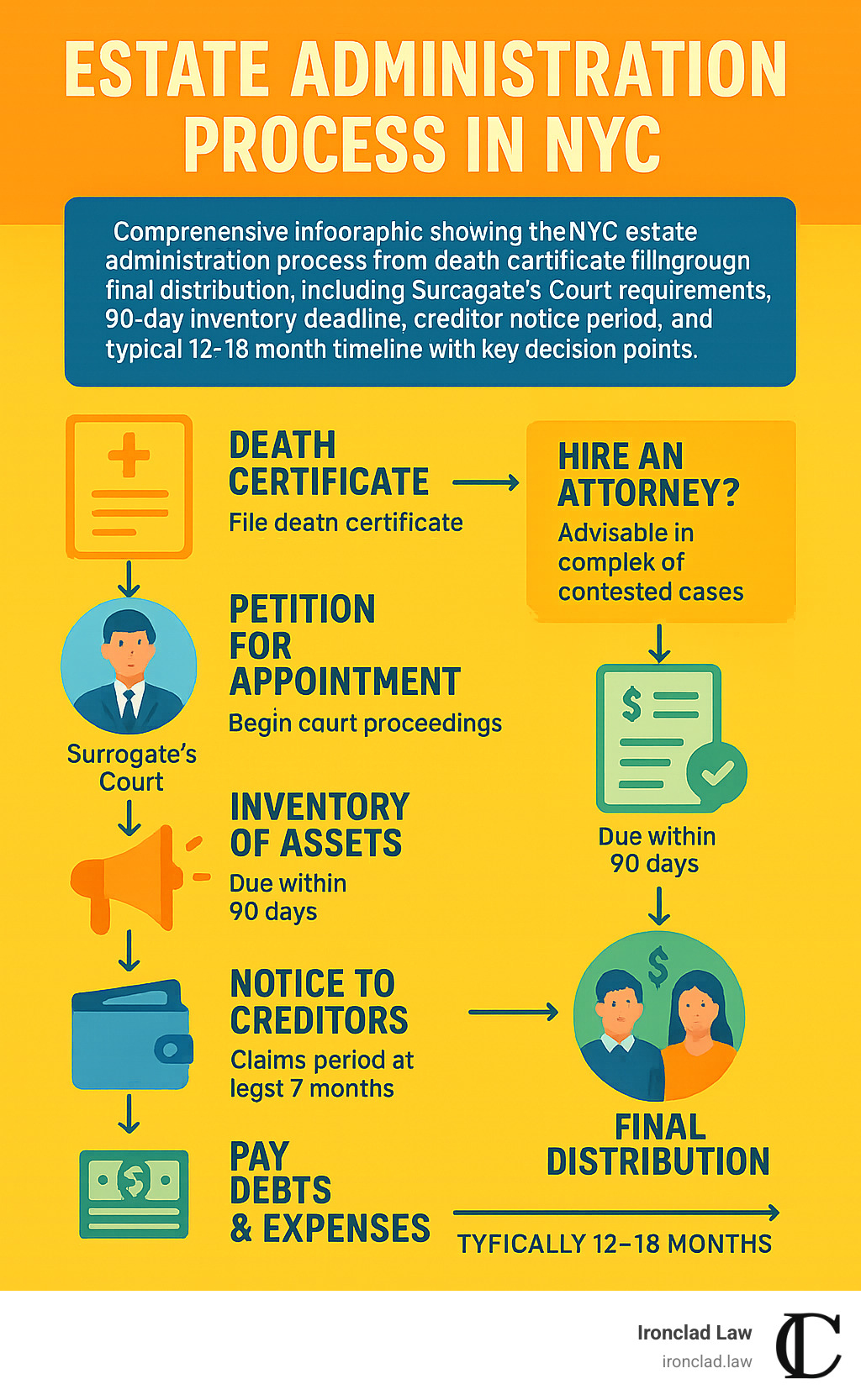
The journey begins with securing essential documents, particularly certified death certificates. Next comes filing the petition with the Surrogate’s Court, submitting the original will or kinship affidavit. The court issues citations that must be served on everyone with legal interest.
Once objections are resolved, the court issues Letters Testamentary or Letters of Administration. Publishing notice to creditors must happen within a reasonable time, starting the seven-month creditor claim period.
Your Letters allow you to open an estate bank account. The 90-day asset inventory deadline requires a comprehensive list of all assets. Managing and preserving assets becomes your ongoing responsibility.
Paying debts and taxes involves reviewing creditor claims and filing final tax returns. After the creditor period expires, asset distribution can begin. The final step requires preparing a detailed accounting for court approval.
For guidance on estate planning documents, see our resource on Simple Will and Power of Attorney. Understanding What is a Probate Attorney? helps steer when professional help is needed.
Document Checklist
Essential legal documents include multiple certified death certificates, the original will, marriage certificates, and birth certificates for heirs. Financial records reveal the estate’s scope – bank statements, investment portfolios, and life insurance policies.
Personal property documentation includes appraisals for valuable items and vehicle titles. Digital asset inventories cover cryptocurrency wallets and online accounts. Debt information helps understand estate obligations.
Timeline From Petition to Final Accounting
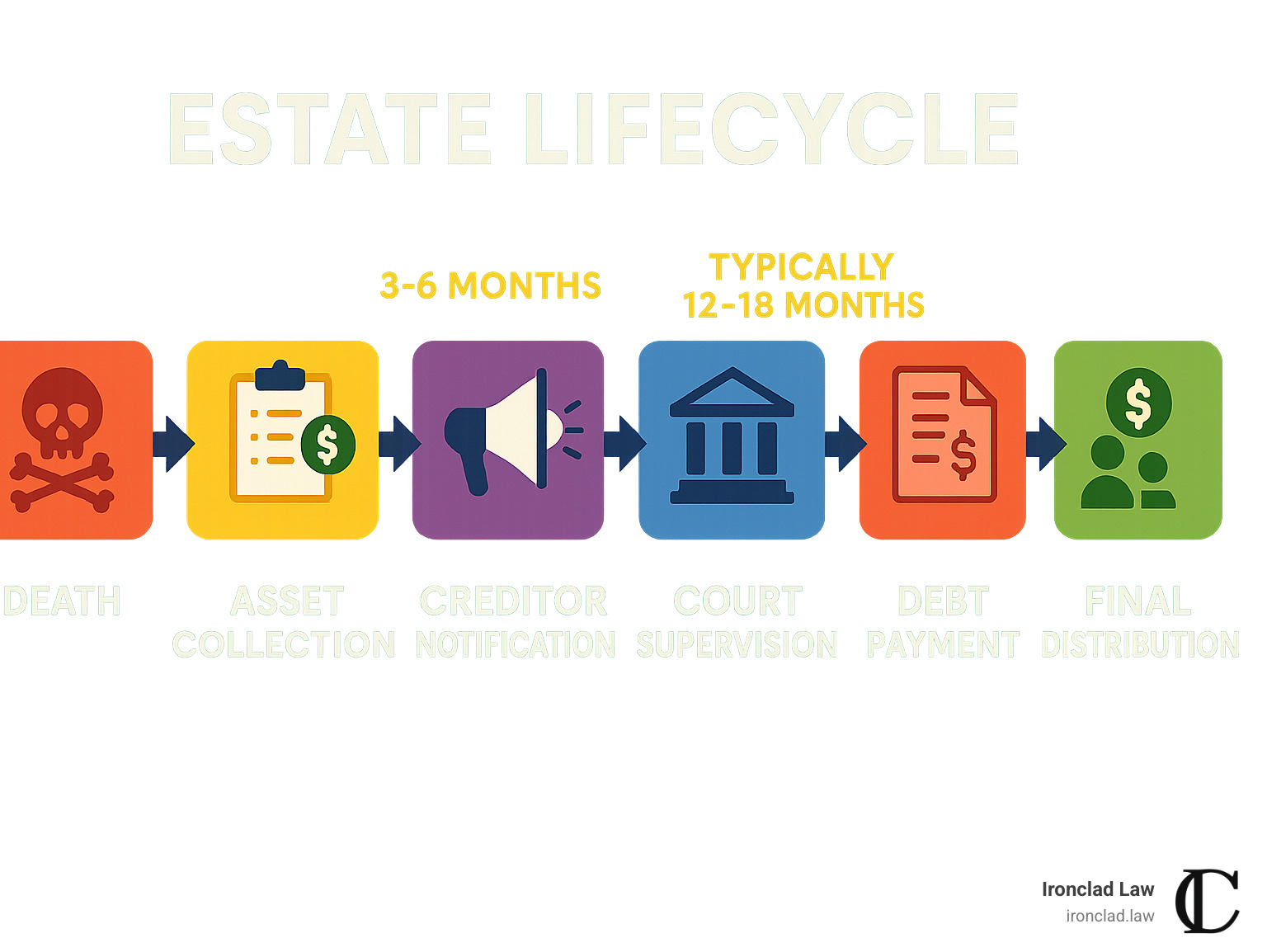
NYC estate administration typically spans 12 to 18 months. The first two months focus on getting appointed and opening the estate account. Months two through four involve the asset inventory deadline and creditor notice publication.
The middle phase involves reviewing creditor claims and tax preparation. The final phase focuses on distribution and court accounting approval.
Factors that extend timelines include will contests, complex valuations, real estate sales, and missing beneficiaries. The seven-month creditor period serves as a key milestone.
Disputes, Pitfalls & Litigation: Keeping the Peace—and the Assets

Estate disputes often stem from years of family tension that surface after someone dies. Undue influence claims involve situations where elderly parents change wills dramatically after moving in with one child. Will contests challenge a will’s validity, claiming the decedent wasn’t competent or was coerced.
Kinship hearings become necessary when there’s confusion about legal heirs, particularly complex when family members live internationally. Fiduciary misconduct cases involve betrayal of trust – executors who self-deal, fail to account for assets, or abandon their responsibilities.
When disputes escalate, our Estate Litigation Attorney team provides aggressive representation to protect your interests.
Resolving Creditor Claims & Tax Landmines
The statutory notice process starts the creditor claim clock. After publishing newspaper notice, executors must send direct notice to known creditors. Evaluating creditor claims isn’t always straightforward – not every bill requires full payment.
Smart executors can challenge invalid debts, negotiate settlements, and prioritize payments according to legal requirements. Tax obligations create additional complexity, with New York’s estate tax starting at $6.94 million.
ADR, Court Actions & Emergency Relief
Mediation can resolve family disputes while preserving relationships. Family settlement agreements can resolve multiple issues simultaneously. Sometimes court authority is needed through compelling accountings or removing fiduciaries.
Emergency relief situations demand immediate action when estate assets are disappearing. Courts can issue restraining orders or freeze assets. Surcharge orders can hold executors personally liable for losses they cause.
Cost, Timeline & FAQ—Choosing the Right Advocate
Most families spend between $3,000 and $15,000 on legal fees for straightforward estate administration in NYC. Court filing fees start at $215, plus costs for creditor notice publications and professional appraisals.
Most estate administration lawyers NYC use hourly billing. As the administrator, you’re entitled to compensation under New York’s sliding-scale commission structure starting at 5% on the first $100,000.
Our Estate Lawyer team believes in transparent pricing and will walk you through all potential costs during consultation.
Questions to Ask a Prospective Estate Administration Lawyer NYC
Ask about their experience with NYC Surrogate’s Courts and estates similar to yours. Find out about their litigation readiness and billing practices. Ask about communication frequency and their approach to digital assets.
Frequently Asked Questions
What happens if there is no will?
When someone dies “intestate”, New York’s laws determine inheritance. If there’s a surviving spouse and no children, the spouse inherits everything. With both spouse and children, the spouse gets $50,000 plus half of what’s left.
How long does estate administration take in NYC?
Most estates take 12 to 18 months, but the seven-month creditor claim period is built into every estate. Real estate sales, family disputes, and tax complications can extend timelines significantly.
How are administrator fees calculated?
New York sets maximum fee schedules on a sliding scale, but courts can reduce fees if you hire professionals to do most work or if administration was unusually straightforward.
Conclusion & Next Steps
Estate administration in New York City requires precision, timeliness, and complete compliance with procedures. Missing the 90-day inventory deadline or failing to properly notify creditors can create serious legal problems.
The complexity of modern estates – with digital assets, cryptocurrency, and co-op apartments – means even “simple” estates often require professional guidance. Add emotional stress, and families benefit significantly from experienced legal counsel.
Your Path Forward
Start by gathering essential documents: death certificates, the will, bank statements, and property deeds. Consider the estate’s complexity honestly – real estate, business interests, or family conflicts benefit from professional help.
The Ironclad Difference
At Ironclad Law, we combine aggressive advocacy when disputes arise with practical guidance to prevent problems. We understand you’re honoring someone’s memory while protecting your family’s future.
Our Estate Administration Lawyers team is ready to provide the guidance your family needs. We’ll handle legal complexities while you focus on taking care of your family.
Schedule your confidential strategy call today. Let’s discuss your specific situation and create a plan that protects your interests while honoring your loved one’s wishes. Proper estate administration ensures your loved one’s final wishes are respected and your family’s future is secure.