
You have 0 items in your cart

Securing Your Legacy: Why Expert Estate Planning Matters
If you’re looking for lawyers specializing in trusts and wills, here’s what you need to know:
| Key Considerations | What to Look For |
|---|---|
| Experience | At least 5+ years focusing specifically on estate planning |
| Specialization | Certified specialist in estate planning, trusts, and probate law |
| Local Knowledge | Familiarity with your state’s specific estate laws |
| Services Offered | Will drafting, trust creation, tax planning, probate assistance |
| Communication | Clear explanations of complex legal concepts |
Estate planning is one of life’s most important decisions, yet many people postpone it until it’s too late. Lawyers specializing in trusts and wills do much more than draft documents — they help safeguard your legacy, protect your loved ones, and ensure your wishes are carried out after you’re gone.
As the American College of Trust and Estate Counsel notes, “Estate planning doesn’t have to be scary. We simplify the process so you achieve the best possible outcome.” A skilled attorney can steer the complexities of estate tax laws, asset protection strategies, and family dynamics that might otherwise lead to costly mistakes or family conflicts.
Whether you’re creating your first will, establishing a trust to avoid probate, or updating existing documents due to life changes, working with the right legal expert makes all the difference. The risks of inadequate planning are significant — as one industry insight reveals, “Without competent legal advice, you risk choosing a trust type you do not need, underfunding your trust, not funding it adequately, and other common missteps.”
I’m Michael Hurckes, Managing Partner at Ironclad Law with extensive experience advising clients on estate planning matters, including the strategic use of lawyers specializing in trusts and wills to protect assets and create comprehensive legacy plans. My background in financial services and regulatory compliance gives me unique insight into the complex interplay between estate planning and wealth preservation.
Key terms for lawyers specializing in trusts and wills:
– attorneys specializing in wills
– simple will and power of attorney
Understanding the Roles of Lawyers Specializing in Trusts and Wills
Lawyers specializing in trusts and wills are far more than document drafters – they’re trusted advisors who help you steer life’s most important financial decisions. These attorneys dedicate their careers to ensuring your wishes are honored, your loved ones are protected, and your legacy remains intact long after you’re gone.
The American College of Trust and Estate Counsel (ACTEC) emphasizes that these specialized attorneys serve as strategic partners in helping you achieve personal and financial goals while maximizing potential tax savings. At Ironclad Law, we’ve seen how thoughtful estate planning prevents heartache and preserves family harmony during difficult times.

When you work with estate planning attorneys, you benefit from their expertise in several crucial areas. They create comprehensive strategies for distributing your assets exactly as you wish. They develop approaches to preserve and grow your wealth across generations. They minimize estate, gift, and other transfer taxes through careful planning. They establish and manage various types of trusts custom to your situation. They guide executors through probate proceedings with minimal stress. And perhaps most importantly, they protect your hard-earned assets from potential creditors and legal claims.
As one of our clients recently shared: “After 15+ years of marriage and children, my husband and I decided it was time to update our wills, healthcare proxies, etc. Our initial meeting was fantastic! Our attorney reviewed our information, gave recommendations, and patiently answered a litany of questions…we really appreciated the transparency.”
What Does a Trusts and Estates Attorney Do?
The work of lawyers specializing in trusts and wills extends far beyond basic document preparation. At Ironclad Law, we take a comprehensive approach to safeguarding your future.
First and foremost, we create essential legal documents custom to your specific situation. This includes drafting legally binding wills that clearly express your wishes, establishing trust agreements that protect your assets, creating powers of attorney to ensure your finances are managed properly if you’re unable to do so, and preparing healthcare directives that guide medical decisions according to your values.
For business owners, we provide critical guidance on succession planning. Who will take over your business? How will ownership transfer? Will it be sold or kept in the family? These questions require thoughtful planning with someone who understands both business and estate law.
Tax strategy forms another cornerstone of our work. The tax implications of transferring wealth can be substantial, but with proper planning, we can help minimize these burdens. We address federal estate, gift, and generation-skipping tax issues to help preserve more of your hard-earned assets for your beneficiaries.
When the time comes, we provide compassionate probate guidance to help Personal Representatives steer court filings, asset valuation, insurance claims, tax returns, and asset distribution during what is often an emotionally difficult time.
For trustees, we offer ongoing trust administration support, helping them understand their legal obligations, properly fund trusts, and comply with all trust terms. As one industry expert notes, “Trustees are responsible for creating an inventory of trust assets, filing tax returns, managing assets properly, and distributing them in accordance with the trust agreement. Legal counsel can help ensure these obligations are met effectively.”
If you’re specifically looking for an attorney for will creation, remember this is just one piece of a comprehensive estate plan. At Ironclad Law, we look at your entire financial picture and family situation to create a holistic strategy.
How Lawyers Specializing in Trusts and Wills Assist with Wealth Planning
Wealth planning sits at the heart of what lawyers specializing in trusts and wills provide. This process isn’t just for the ultra-wealthy – it’s for anyone who wants to protect what they’ve built and ensure it benefits those they love.
At Ironclad Law, we begin wealth planning with a thoughtful conversation about your goals. Do you want to provide for a spouse’s lifetime needs? Fund grandchildren’s education? Support a favorite charity? Understanding these personal objectives shapes everything that follows.
Next, we analyze how federal and state tax laws affect your specific situation. Tax laws are constantly changing, and what worked five years ago might not be optimal today. We integrate these complex regulations into a plan that makes sense for your unique circumstances.
With clear objectives and tax considerations in mind, we develop customized strategies to minimize liabilities while achieving your personal goals. These might include specialized trusts, gifting strategies, charitable planning, or business succession arrangements.
Finally, we prepare all necessary legal documents to implement your plan effectively. As industry experts note, our goal is to “help clients achieve their personal and financial objectives while maximizing potential tax savings through proper planning and execution of estate strategies.”
Here’s a sobering reality that underscores the importance of this planning: 3 in 4 senior adults over age 65 will require long-term nursing care at some point. Without proper planning, these costs can quickly deplete an estate. At Ironclad Law, our lawyers specializing in trusts and wills can help protect your assets from these potential expenses through various legal strategies.
By taking a proactive approach to wealth planning now, you can enjoy greater peace of mind knowing that your affairs are in order and your loved ones will be cared for according to your wishes.
Trusts vs. Wills: Understanding the Difference
One of the most common questions we receive at Ironclad Law is about the difference between trusts and wills. While both are essential estate planning tools, they serve different purposes and offer distinct advantages.

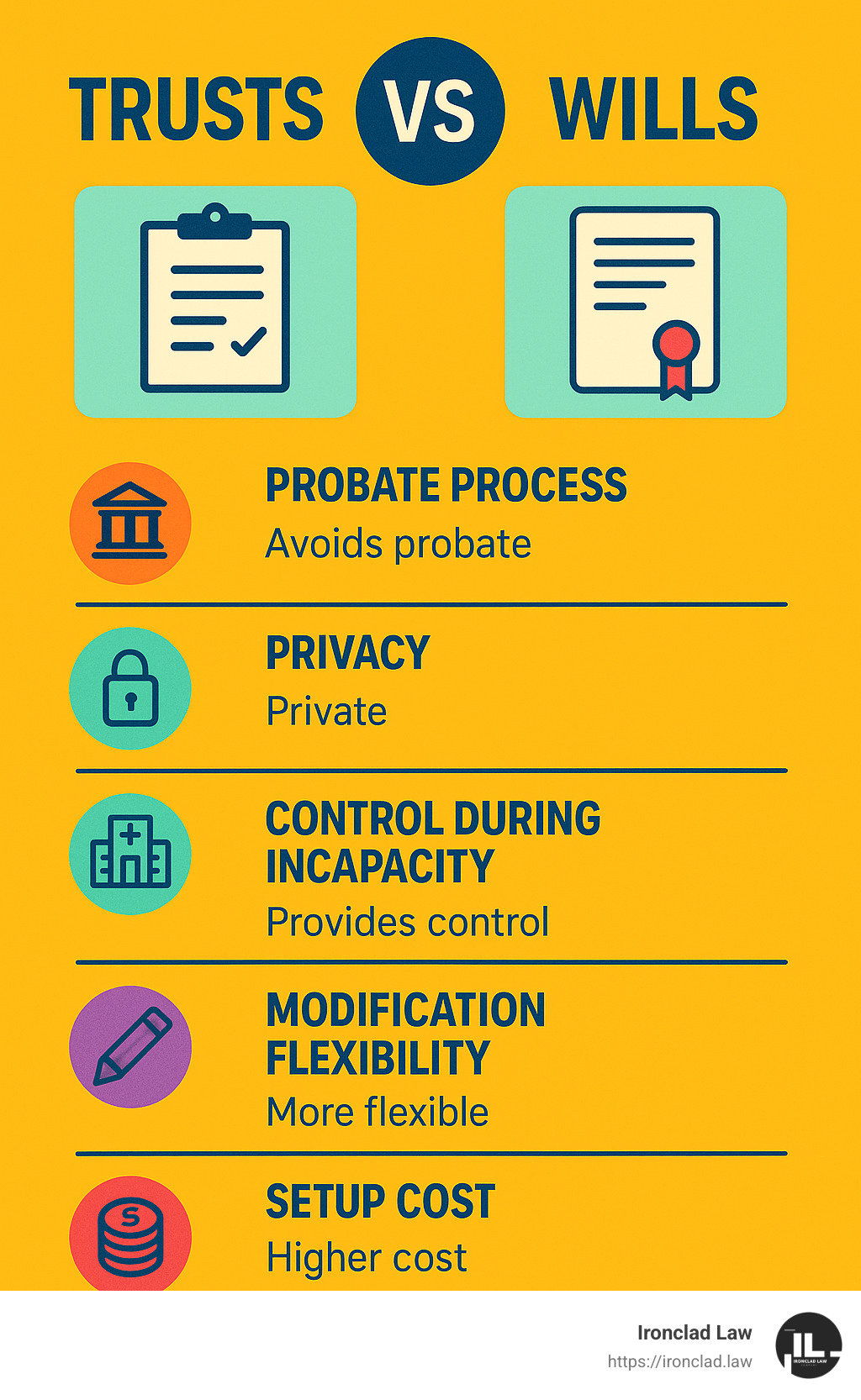
Here’s a comprehensive comparison to help you understand these important legal instruments:
| Feature | Wills | Trusts |
|---|---|---|
| When it takes effect | After death only | Can be effective during life and after death |
| Probate process | Must go through probate | Typically avoids probate |
| Privacy | Public record | Generally private |
| Control during incapacity | No control | Can provide management if grantor becomes incapacitated |
| Contestability | Easier to contest | More difficult to challenge |
| Cost to establish | Generally less expensive | Usually more expensive initially |
| Ongoing maintenance | Minimal | May require ongoing administration |
| Protection from creditors | Limited | Can provide significant protection (especially irrevocable trusts) |
| Tax benefits | Basic | Can offer substantial tax advantages |
Think of a will as your final set of instructions that kicks in after you’re gone. It’s the traditional document most people are familiar with – it tells everyone who gets what, who’ll look after your kids if they’re minors, and who’ll be in charge of making sure your wishes are followed (that’s your executor). The downside? Your will has to go through probate court, which can be like waiting in the world’s slowest checkout line – time-consuming, potentially expensive, and completely public.
A trust, on the other hand, is more like setting up a management system for your assets. You’re essentially creating a legal entity that holds your stuff according to rules you establish. The beauty of a trust is that it can start working during your lifetime (especially helpful if you become incapacitated) and continues seamlessly after you’re gone – no probate required. Your affairs stay private, and your loved ones typically get access to their inheritance much faster.
As one of our clients recently told us after setting up her trust, “It’s like I finally have peace of mind knowing everything is organized exactly how I want it, whether I’m here or not.”
Common Types of Trusts
When working with lawyers specializing in trusts and wills, you’ll find there’s a whole family of trust options, each designed with specific purposes in mind. At Ironclad Law, we help clients steer these choices without getting lost in legal jargon.
Revocable Living Trusts are probably the most popular option we create for clients. Think of these as trusts with flexibility – you maintain control of your assets and can change or even cancel the trust during your lifetime. Many of our clients appreciate that they can be the trustee of their own revocable trust, essentially changing nothing about how they manage their day-to-day finances while gaining all the benefits of avoiding probate later.
Irrevocable Trusts are more like permanent decisions – once established, they’re difficult to change. That might sound intimidating, but the trade-off can be worth it. These trusts offer serious asset protection and tax advantages that revocable trusts simply can’t match. We often recommend these for clients with larger estates or specific protection concerns.
For families with special needs loved ones, Special Needs Trusts are absolutely essential. These specialized trusts help provide for someone with disabilities without disqualifying them from crucial government benefits like Medicaid or Supplemental Security Income. I’ve seen how these trusts bring immense relief to parents worried about their child’s long-term care.
Charitable Trusts let you support causes you care about while potentially receiving significant tax benefits. We’ve helped many clients create lasting legacies through carefully structured charitable giving.
For clients concerned about long-term family wealth, Dynasty Trusts can preserve assets across multiple generations while minimizing various taxes that would otherwise take substantial bites out of your family legacy.
Homeowners with substantial equity might benefit from Qualified Personal Residence Trusts (QPRTs), which allow you to transfer your home to beneficiaries at a reduced gift tax cost while keeping the right to live there for a specific period.
And for those with substantial life insurance policies, Insurance Trusts can keep those proceeds outside your taxable estate – a simple move that can save your heirs significant tax dollars.
The right trust depends entirely on your personal situation, which is why cookie-cutter solutions rarely work in estate planning. As one client told me after we designed her custom trust solution, “I had no idea there were so many options. I’m so glad I didn’t just download some generic form online!”
When to Use a Trust or a Will
Deciding between a trust, a will, or a combination of both isn’t always straightforward. At Ironclad Law, we find this decision depends largely on your personal circumstances and goals.
A will might be perfectly sufficient if your situation is relatively straightforward. If you have a modest estate, your primary concerns are naming guardians for young children, and you’re not particularly worried about the probate process, a will could be all you need. Wills are generally less expensive to set up initially, making them attractive for younger adults just starting their estate planning journey.
However, as life gets more complex, trusts often become more valuable. If privacy matters to you (and remember, wills become public record), a trust keeps your affairs confidential. If you own property in multiple states, a trust can help your loved ones avoid dealing with probate proceedings in each state – something we’ve seen cause major headaches for families.
Lawyers specializing in trusts and wills often recommend trusts for clients concerned about potential incapacity. Unlike a will, which only works after death, a trust can include provisions for managing your assets if you become unable to do so yourself. This feature alone gives many of our clients tremendous peace of mind.
Trusts also shine when you want to provide ongoing management for beneficiaries who might not be ready to handle an inheritance. Whether it’s a young adult who needs time to mature financially or a loved one with addiction issues, trusts can include thoughtful provisions for how and when assets are distributed.
For clients with larger estates, the tax advantages of certain trusts can be substantial. As one client remarked after we helped him set up a tax-optimized trust structure, “I’d rather see my money go to my grandkids’ college funds than to Uncle Sam!”
Many of our clients at Ironclad Law ultimately choose both approaches – creating a revocable living trust for most assets, paired with a “pour-over will” that captures anything not transferred to the trust during their lifetime. This combination provides maximum protection and flexibility.
For those with simpler needs, a simple will and power of attorney may be sufficient to start. We often tell clients that estate planning isn’t a one-and-done event but rather a process that evolves as your life changes.
I remember one client who initially came in for a basic will when she was a young professional. Over the years, as her career flourished and she started a family, we helped her transition to a comprehensive trust-based plan. “I never thought I’d need anything complicated,” she told me, “but now I understand why it’s worth having the right tools for each stage of life.”
Without proper planning, families can face unintended consequences – assets going to unexpected people, insufficient funds for taxes, or complicated probate issues that drain both emotional energy and financial resources from those you love most.
How to Choose the Right Trusts and Wills Lawyer
Finding the perfect lawyers specializing in trusts and wills feels a bit like finding a good family doctor – you need someone who’s not just technically skilled, but who truly understands your unique situation and concerns. At Ironclad Law, we’ve seen how the right attorney can make all the difference in creating a plan that truly protects your loved ones.
Think of choosing an estate planning attorney as one of the most important hiring decisions you’ll ever make. After all, this person will help safeguard everything you’ve worked for and ensure your wishes are honored. That’s not a responsibility to take lightly!
When evaluating potential lawyers specializing in trusts and wills, start by looking at their specialized experience. You wouldn’t hire a dermatologist to perform heart surgery, right? Similarly, you want an attorney who lives and breathes estate planning, not someone who handles it as an occasional side project. The best practitioners devote at least half their practice to this area and have years of experience creating estate plans similar to what you need.
Credentials matter too. Beyond just a law degree, look for attorneys who’ve gone the extra mile with additional certifications in estate planning. Some lawyers become certified as Specialists in Estate Planning, Trust and Probate Law through their state Bar’s Board of Legal Specialization – a sign they’ve demonstrated exceptional knowledge in this field.
Pay close attention to their approach during your initial consultation. The best lawyers specializing in trusts and wills don’t immediately jump into document drafting. Instead, they take time to understand your complete financial picture, family dynamics, and long-term goals. If an attorney seems to be rushing you toward a one-size-fits-all solution, that’s a red flag.
Communication style is absolutely crucial. Estate planning involves complex concepts that affect your family’s future, so your attorney should explain everything in plain English, not legal jargon that leaves you confused. As one of our clients recently told us, “I finally found a lawyer who speaks human! He explained everything so clearly that I actually understand my own estate plan now.”
Be upfront about fees from the beginning. Some attorneys charge flat rates for specific documents, while others bill hourly. Neither approach is inherently better, but you deserve complete transparency about costs. Ask for a detailed explanation of the fee structure and what services are included.
The attorney-client relationship in estate planning often spans many years, so personal compatibility matters. You’ll be discussing deeply personal matters with this person – family relationships, finances, health concerns – so choose someone you feel comfortable with. Trust your gut feeling about whether you connect with them.
As one satisfied client shared: “It is a pleasure to encounter [an attorney] that is honest, straight-forward, and not just the typical game player. I am completely satisfied, no regrets.”
Importance of Local Expertise
There’s a reason lawyers specializing in trusts and wills often focus on specific states – because local knowledge really matters in estate planning. Think of it like hiring a local guide when traveling somewhere new. A general guidebook works, but a local knows all the hidden paths and potential pitfalls.
Estate planning laws vary dramatically from state to state, and these differences can have major impacts on how your plan functions. At Ironclad Law, our New York-focused practice gives us deep familiarity with the nuances that affect our clients.
For instance, New York has its own estate tax with an exemption threshold that’s quite different from the federal exemption. Without proper planning that accounts for this state-specific tax, your estate could end up paying thousands in unnecessary taxes. A lawyer from another state might miss this critical detail.
Probate procedures also differ significantly by location. In some states, probate is relatively quick and inexpensive, while in others, it’s a lengthy, costly process best avoided. Local attorneys understand the realities of your specific court system and can advise whether probate avoidance should be a priority in your plan.
Property ownership rules present another state-specific consideration. Some states follow community property laws, while others use common law principles. This fundamental difference affects everything from asset protection to inheritance rights. Lawyers specializing in trusts and wills who work locally understand these nuances intuitively.
Even seemingly standard documents like healthcare directives and powers of attorney often contain state-specific language requirements. Using generic forms from the internet or an out-of-state attorney could mean your documents aren’t fully recognized when you need them most.
For business owners, local expertise becomes even more critical. If you’re planning for business succession, a succession lawyer who understands your state’s business laws can help ensure a smooth transition that protects both your company and your family’s interests.
Questions to Ask Potential Lawyers Specializing in Trusts and Wills
When you sit down with potential lawyers specializing in trusts and wills, think of it as an interview – because that’s exactly what it is! You’re interviewing someone for an incredibly important job, and asking the right questions helps ensure you find the perfect fit.
Start by understanding their focus: “What percentage of your practice is devoted to estate planning?” Ideally, you want someone who spends most of their professional life in this area. An attorney who handles estate planning as just 10% of their practice simply won’t have the depth of knowledge that a specialist does.
Next, get specific about your situation: “Have you handled cases similar to mine before?” If you own a business, have a blended family, or care for a child with special needs, you need an attorney who has steerd these specific challenges before. At Ironclad Law, we’re always transparent about our experience with particular situations.
Good lawyers specializing in trusts and wills never stop learning, so ask: “How do you stay current with changing estate and tax laws?” The best attorneys participate in continuing education programs, belong to professional organizations focused on estate planning, and regularly review updates to relevant laws.
Understanding their process reveals a lot: “Walk me through how you develop an estate plan.” Listen for a thoughtful, thorough approach that includes multiple consultations and a comprehensive information-gathering phase. If they make it sound overly simple or quick, they might be cutting corners.
Money matters, so don’t shy away from asking: “How do you charge for your services, and what’s a realistic estimate for my situation?” Some attorneys charge flat fees for specific documents, while others bill hourly. Neither approach is inherently better, but you deserve clarity from the beginning.
One of the most revealing questions is: “Will you help ensure my assets are properly titled and beneficiary designations are coordinated with my estate plan?” This implementation phase is crucial. The best attorneys don’t just draft documents – they help you follow through on the necessary changes to make your plan work.
Estate planning isn’t a one-and-done proposition, so ask: “Do you offer ongoing services to keep my estate plan updated?” Laws change, family situations evolve, and assets grow or shrink. Your attorney should offer a clear process for periodic reviews.
In larger firms, it’s important to know: “Who will actually be drafting my documents, and who will be my primary contact?” There’s nothing wrong with associates or paralegals handling certain aspects of your plan, but you should know exactly who’s responsible for what.
Timelines matter too: “How long will the process take from our first meeting until my plan is implemented?” While rushing isn’t good, neither is unnecessary delay. A good attorney can give you a realistic timeframe.
Finally, think ahead: “What happens if I need to make changes in the future?” Understanding the process and costs for updates helps you plan accordingly.
Beyond technical expertise, trust your instincts about personal connection. Estate planning involves discussing deeply personal matters, so feeling comfortable with your attorney is essential. As one client told us, “I knew she was the right attorney for me when she remembered details about my grandchildren from our first meeting. She really listened, and that matters.”
The Risks of Not Hiring a Specialized Lawyer
When it comes to estate planning, the do-it-yourself approach or hiring a non-specialist can lead to serious consequences. At Ironclad Law, we’ve seen the aftermath of poorly planned estates, and the costs—both financial and emotional—can be substantial.
I remember sitting across from a tearful family who had just finded their father’s self-prepared will wasn’t legally valid. Despite his clear intentions, his assets were being distributed according to state intestacy laws instead of his wishes. This heartbreaking situation could have been avoided with proper legal guidance.
As one industry expert warns: “Without competent legal advice, you risk choosing a trust type you do not need, underfunding your trust, not funding it adequately, and other common missteps.”
The consequences of not working with qualified lawyers specializing in trusts and wills can be far-reaching. Your documents might be deemed invalid if they don’t comply with specific legal requirements—essentially leaving you with no plan at all. I’ve seen this happen more times than I care to count, with families left to steer the complex probate process during an already difficult time.
Without expert guidance, your assets might end up going to unintended beneficiaries, particularly in blended families or complex relationships. One client came to us after finding her late husband’s DIY estate plan accidentally disinherited her children from a previous marriage—something he never intended.
The tax implications can be equally devastating. Missing opportunities for tax planning might result in your heirs paying significantly more in estate, inheritance, or income taxes. A specialized attorney can identify strategies to minimize these burdens, potentially saving your family thousands or even millions of dollars.
Your hard-earned assets deserve protection. Improper planning often leaves them vulnerable to creditors, lawsuits, or long-term care costs. I’ve worked with families who watched their inheritance disappear to nursing home bills because they lacked proper asset protection strategies.
Family harmony is another casualty of poor estate planning. Ambiguous or poorly drafted documents frequently lead to disputes among heirs. These conflicts can spiral into costly litigation and create permanent family rifts. As one client told me after settling a bitter inheritance dispute: “No amount of money is worth losing my relationship with my brother.”
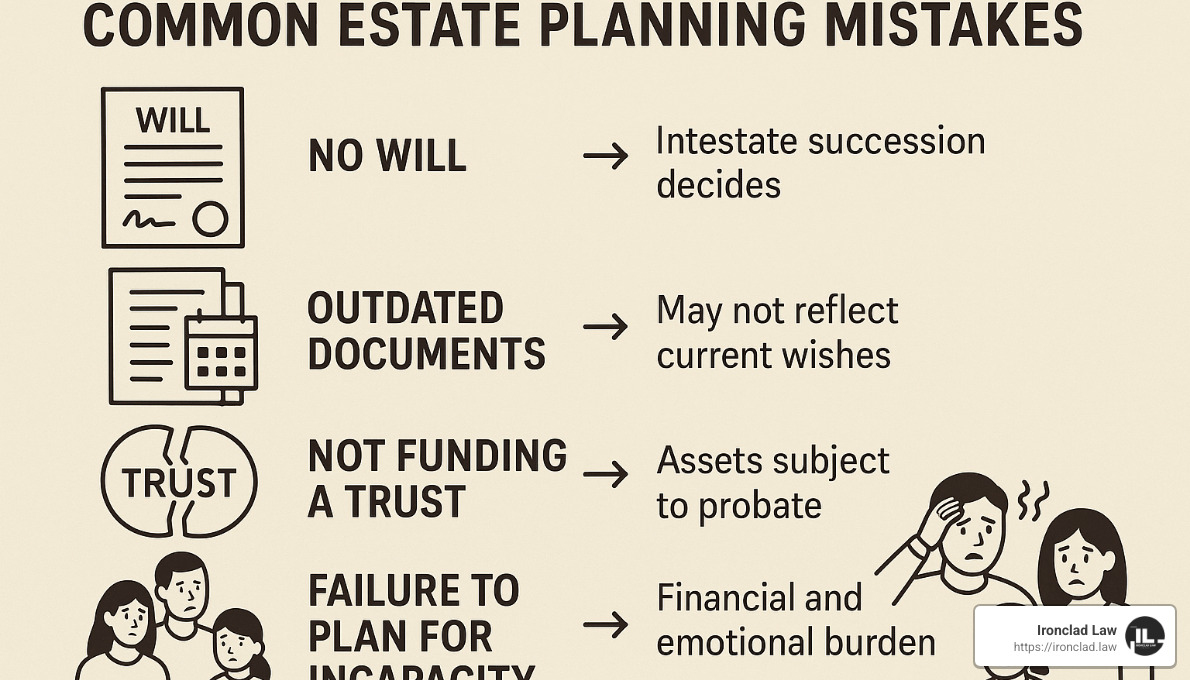
One of the most common pitfalls we see involves trust funding problems. Many people create trusts but fail to properly transfer assets into them—a critical step that requires legal guidance. This “empty trust” provides no benefits and doesn’t avoid probate as intended. It’s like buying an expensive safe but never putting your valuables inside.
Laws change regularly, and without periodic reviews by a specialist, your plan may become outdated or even counterproductive. Estate planning isn’t a one-and-done proposition—it requires maintenance and updates as your life circumstances and applicable laws evolve.
A real-world example we encountered involved a client who had created his own will using an online template. After his passing, his family finded the document hadn’t been properly witnessed according to state law. The result was an intestate probate process (as if he had no will at all), significant legal fees, and a distribution of assets that contradicted his actual wishes.
As one estate planning attorney notes, “Even if a trust was set up without an attorney, legal guidance can still be crucial during its administration.” However, addressing problems after the fact is always more expensive and less effective than proper planning from the start.
At Ironclad Law, we’ve helped countless clients remedy problematic estate plans, but we’d much rather help you get it right the first time. The peace of mind that comes from knowing your affairs are in order is invaluable—and well worth the investment in specialized legal counsel.
Conclusion
Choosing the right lawyers specializing in trusts and wills is one of the most important decisions you can make for your financial future and your family’s security. Throughout this guide, we’ve seen that these specialized attorneys provide far more than just document drafting—they offer comprehensive strategies that protect your assets, minimize taxes, and ensure your wishes are carried out precisely as intended.
At Ironclad Law, we believe estate planning should be both legally sound and personally meaningful. Our approach combines aggressive advocacy with compassionate guidance because we recognize that each client’s situation is unique. Whether you’re looking for a simple will, a sophisticated trust structure, or comprehensive estate planning, our team has the expertise to help you steer these crucial decisions with confidence.
The peace of mind that comes from proper estate planning is invaluable. Knowing your loved ones will be protected and your wishes honored allows you to focus on enjoying life rather than worrying about what might happen later. Lawyers specializing in trusts and wills help provide this security through careful planning and legal expertise.
Estate planning isn’t just for the wealthy—it’s for everyone who cares about what happens to their assets and their family after they’re gone. No matter your financial situation, having proper documents in place shows tremendous care for those you love and spares them additional stress during an already difficult time.
The distinction between trusts and wills is significant, and understanding which tools best fit your circumstances requires professional guidance. Local expertise matters tremendously because estate laws vary substantially from state to state. Working with attorneys who understand the specific regulations in your jurisdiction ensures your plan works exactly as intended when it matters most.
Specialized experience in estate planning is crucial for success. The best lawyers specializing in trusts and wills focus primarily on this area of law and maintain relevant credentials that demonstrate their expertise. When you work with specialists, you benefit from their deep knowledge of tax implications, asset protection strategies, and legal requirements that general practitioners simply may not possess.
The risks of inadequate planning can be severe and far-reaching. Family conflicts, unexpected tax burdens, and assets going to unintended beneficiaries are just some of the potential consequences. Working with qualified professionals helps you avoid these pitfalls and create a plan that truly reflects your wishes.
As you consider your estate planning needs, we invite you to learn more about our estate lawyer services. Our team of experienced lawyers specializing in trusts and wills is ready to help you create a comprehensive plan that protects your legacy and provides security for your loved ones.
Don’t wait until it’s too late—proper estate planning is truly a gift to your family that demonstrates your care and foresight. Contact Ironclad Law today to begin the conversation about securing your legacy for generations to come.