
You have 0 items in your cart

In today’s dynamic financial landscape, obtaining a securities license exam is a pivotal step for ambitious individuals seeking a rewarding career in the securities industry. Whether you’re looking to become a broker-dealer agent or an investment adviser representative, understanding the securities license exam process is essential for success.
Here’s a quick look at the essentials:
- Organization: The Financial Industry Regulatory Authority (FINRA) administers these exams.
- Key Exams: Includes the SIE (Securities Industry Essentials), Series 6, Series 7, Series 63, 65, and 66.
- Purpose: These exams assess your knowledge and competence in the securities industry.
I’m Michael Hurckes, a seasoned attorney specializing in financial services law with a strong background in navigating the securities license exam process. My experience includes guiding clients through regulatory filings and offering insightful counsel during regulatory exams, preparing you for every challenge in the securities field. As we dig further into the article, I’ll provide valuable insights to help you excel in your pursuit of a career in this industry.
Understanding the Securities License Exam
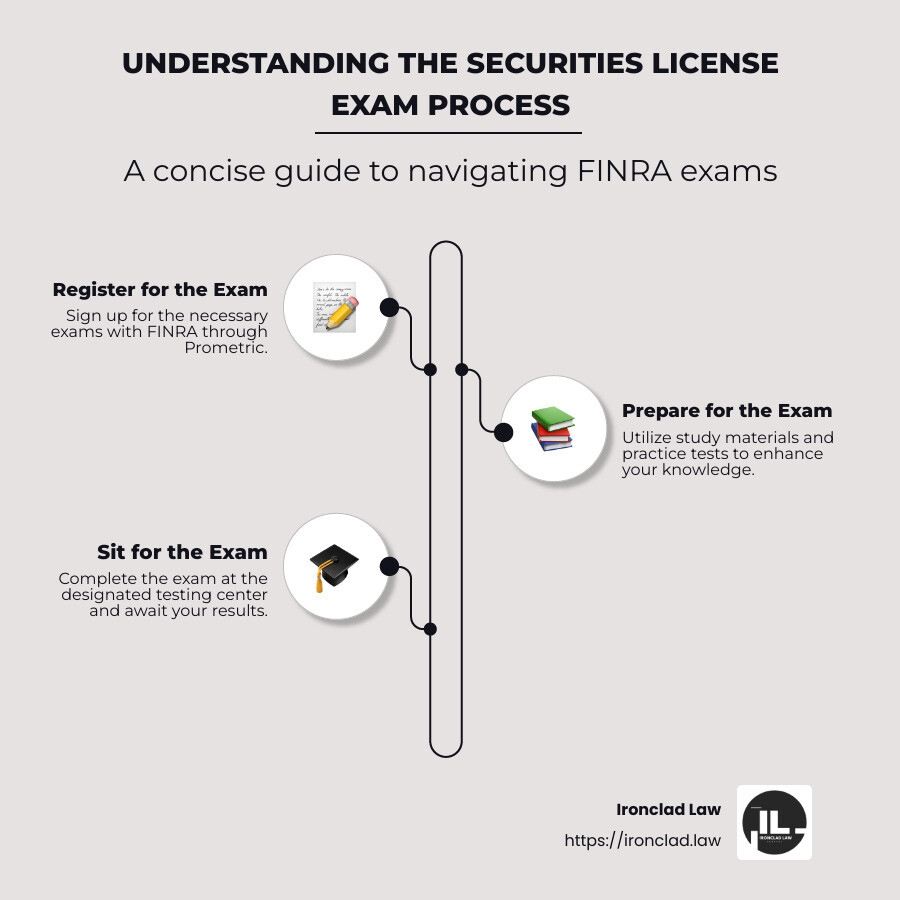
Let’s explore the securities license exam and its components to explain the process for you.
What is the Securities License Exam?
The securities license exam is a series of tests that ensure individuals working in the securities industry have the necessary knowledge and skills. These exams are crucial for anyone looking to become a registered representative, broker-dealer, or investment adviser.
FINRA Exams Explained
The Financial Industry Regulatory Authority, or FINRA, is the key player here. FINRA administers these exams to maintain the integrity and competence of professionals in the securities industry.
Some of the most common FINRA exams include:
-
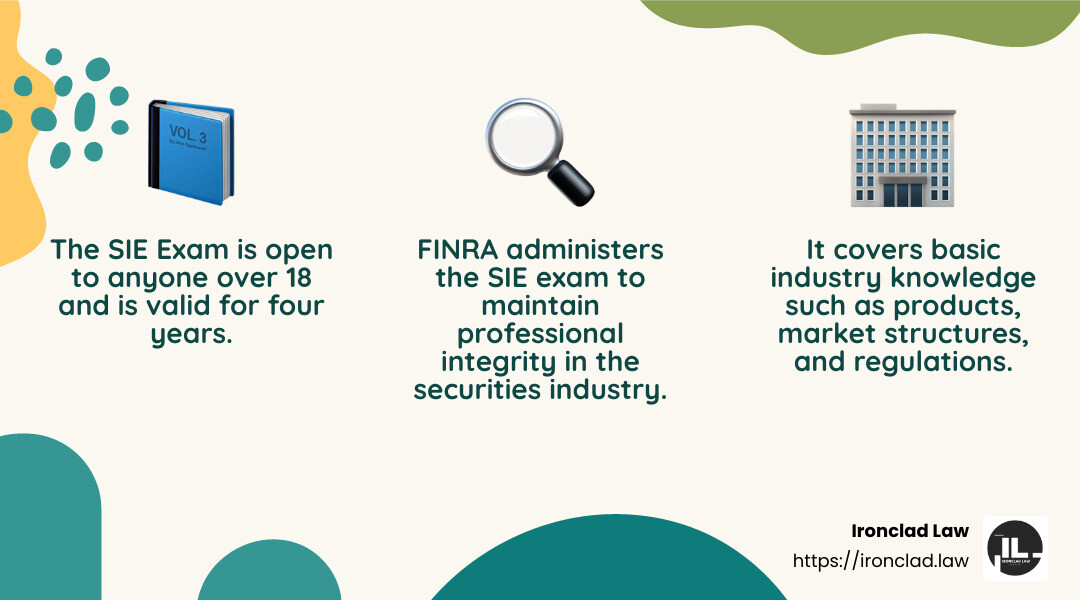
Securities Industry Essentials (SIE) Exam: This is the starting point for anyone entering the securities industry. It covers basic industry knowledge, including types of products, market structures, and regulations. It’s open to anyone over 18 and is valid for four years.
-
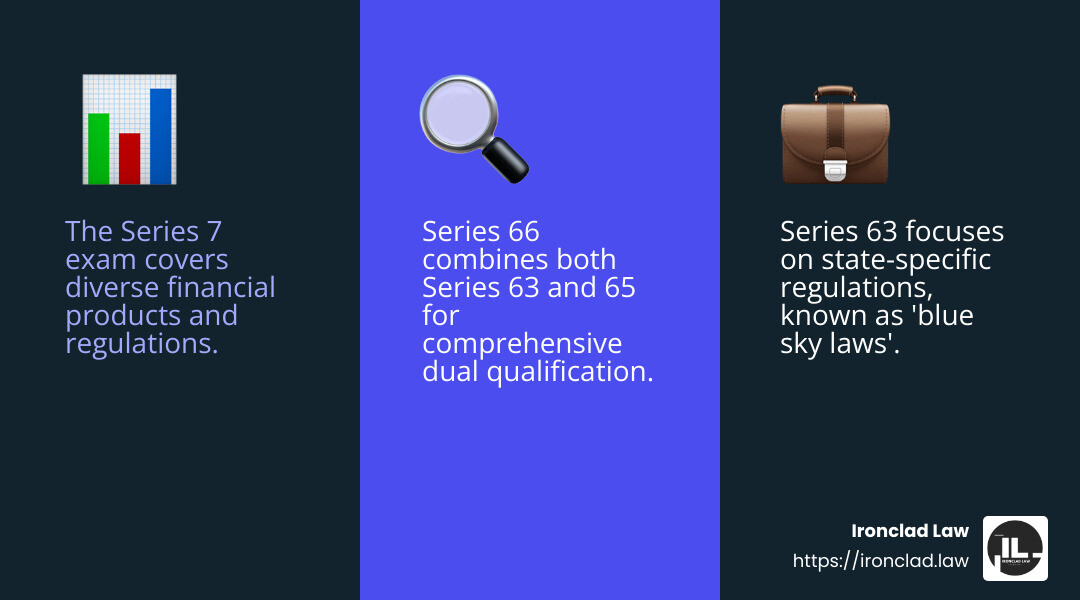
Series 6 and Series 7: These exams focus on specific securities products and functions. The Series 6 is for those selling mutual funds and variable annuities, while the Series 7 is for those involved in selling a broader range of securities.
-
Series 63, 65, and 66: These exams are state law exams. Series 63 is required for broker-dealer agents, Series 65 for investment adviser representatives, and Series 66 combines the two for those who want dual registration.
The SIE Exam: Your First Step
The Securities Industry Essentials (SIE) Exam is an entry-level exam that doesn’t require sponsorship from a firm. It’s a great way to demonstrate your basic industry knowledge to potential employers. Passing the SIE is a prerequisite for taking other qualification exams like the Series 6 and Series 7.
Key SIE Exam Details:
- Format: 75 multiple-choice questions
- Duration: 1 hour and 45 minutes
- Cost: $80
- Passing Score: 70%
The SIE exam is open to anyone over 18. It covers a broad range of topics, such as types of products and their risks, the structure of the securities markets, and the functions of regulatory agencies. This exam sets the foundation for your career in the securities industry.
Understanding these exams is the first step in open uping your potential in the financial world. Next, we’ll explore the key securities license exams that can further your career.
Key Securities License Exams
When it comes to advancing in the securities industry, understanding the key securities license exams is essential. These exams are designed to prepare you for various roles, from selling mutual funds to providing investment advice. Let’s break down the exams you need to know.
Series 6: Investment Company and Variable Contracts Products Representative
The Series 6 exam is your ticket if you plan to sell mutual funds, variable annuities, and similar products. It’s perfect for those working in insurance or investment companies.
- Format: 50 multiple-choice questions
- Duration: 1 hour and 30 minutes
- Cost: $75
This exam focuses on packaged securities, so it’s less comprehensive than the Series 7. However, it’s crucial for those specializing in mutual funds.
Series 7: General Securities Representative
The Series 7 exam is often considered the gold standard in the securities industry. It qualifies you to sell a wide range of securities, from stocks and bonds to options and municipal securities.
- Format: 125 multiple-choice questions
- Duration: 3 hours and 45 minutes
- Cost: $300
Passing the Series 7 is a significant achievement. It’s known for its breadth and depth, covering everything from investment risk to regulatory requirements.
Series 63: Uniform Securities Agent State Law Exam
The Series 63 exam is essential for anyone selling securities across state lines. It ensures you understand state-specific regulations, often called “blue sky laws.”
- Format: Usually around 60 questions
- Focus: State laws and ethical practices
While not as comprehensive as the Series 7, the Series 63 is vital for compliance with state regulations. Some states, like Colorado and Florida, do not require it, but many firms do.
Series 65: Uniform Investment Adviser Law Exam
If you’re aiming to become an investment adviser representative, the Series 65 is for you. It focuses on investment advice and portfolio management.
- Format: 130 questions
- Focus: Investment strategies, ethics, and laws
Passing the Series 65 allows you to provide investment advice and manage client portfolios without needing the Series 7.
Series 66: Uniform Combined State Law Exam
The Series 66 exam is a combination of the Series 63 and 65. It’s ideal for those who want to become both a broker-dealer and an investment adviser.
- Format: 100 questions
- Prerequisite: Must have passed the Series 7
By passing the Series 66, you meet the requirements for both broker-dealer agents and investment adviser representatives, provided you also pass the Series 7.
These exams are stepping stones to a successful career in the securities industry. Each serves a specific purpose and opens doors to different opportunities. Next, we’ll discuss how to prepare effectively for these exams.
Preparing for the Securities License Exam
Getting ready for a securities license exam can feel overwhelming, but with the right approach, it’s manageable. Here’s how to prepare effectively:
Exam Format
Understanding the exam format is crucial. Most securities exams, including the Securities Industry Essentials (SIE) Exam, are multiple-choice. For instance, the SIE exam consists of 75 questions, and you have 1 hour and 45 minutes to complete it. This exam covers four main areas:
- Knowledge of Capital Markets (16%)
- Understanding Products and Their Risks (44%)
- Understanding Trading, Customer Accounts, and Prohibited Activities (31%)
- Overview of Regulatory Framework (9%)
Knowing the format helps you manage your time better during the exam.
Study Materials
Using the right study materials can make a big difference. The Kaplan Securities Industry Essentials License Exam Manual is a popular choice. This book breaks down complex topics into simple units, includes graphics, exercises, and quizzes to help reinforce your understanding.
Key features of the Kaplan manual include:
- Key terms and significant topics in digestible units.
- Practice problems and discussion questions to test your knowledge.
Many users find this book well-organized and easy to follow, with concepts presented in multiple ways to aid understanding.
Practice Tests
Practice tests are your best friend when preparing for a securities license exam. They help you get familiar with the question format and time constraints. Taking practice exams can also highlight areas where you need more study.
- Tip: Try to simulate exam conditions when taking practice tests. This means timing yourself and working in a quiet space.
By taking these steps, you’ll be better prepared to tackle the securities license exam with confidence.
Next, we’ll explore the benefits of passing these exams and how they can improve your career in the securities industry.
Benefits of Passing the Securities License Exam
Passing a securities license exam opens up a world of opportunities in the financial industry. Let’s explore how it can boost your career, increase your marketability, and foster professional growth.
Career Opportunities
Once you pass a securities license exam, such as the Series 6 or Series 7, you become eligible for a variety of roles. These exams allow you to work as a broker-dealer representative or an investment adviser. For instance, the Series 7 exam is known for its comprehensive coverage, enabling you to sell a wide range of securities like stocks and bonds. This breadth of knowledge makes you a valuable asset to any financial firm.
Additionally, passing the Series 63 exam is often required if you plan to sell securities across state lines. This state-level focus ensures compliance with local regulations, broadening your job prospects.
Marketability
Having a securities license on your resume significantly improves your marketability. It signals to employers that you have the necessary knowledge and skills to handle complex financial products and adhere to industry regulations.
Employers often look for candidates who have passed exams like the SIE, as it demonstrates foundational knowledge of the securities industry. This can set you apart from other candidates and make you a more attractive hire.
Professional Growth
Achieving a securities license is just the beginning of your professional journey. It lays the groundwork for continuous learning and advancement. For example, after passing the initial exams, you can pursue specialized certifications or higher-level exams to deepen your expertise.
Moreover, holding a securities license can lead to more responsibilities and promotions within your organization. It shows your commitment to the profession and your readiness to take on challenging roles, paving the way for long-term career advancement.
Passing a securities license exam not only open ups immediate job opportunities but also sets the stage for ongoing career development and success in the dynamic world of finance.
Next, we’ll tackle some frequently asked questions about the securities license exam, including how to register and the associated costs.
Frequently Asked Questions about Securities License Exam
What is the SIE Exam?
The Securities Industry Essentials (SIE) Exam is a foundational test for anyone looking to enter the securities industry. Administered by FINRA, this exam assesses your understanding of basic industry concepts, such as product types, market structures, regulatory agencies, and prohibited practices. It’s the first step toward a career in securities, open to anyone 18 or older, and you don’t need to be associated with a firm to take it. The SIE consists of 75 multiple-choice questions, and you have 1 hour and 45 minutes to complete it. A passing score is 70, and the results are valid for four years.
How do I register for the exam?
Registering for the SIE exam is straightforward. Here’s how you can do it:
-
Create an Account: Start by creating an account on the FINRA website.
-
Enroll for the SIE: You can enroll yourself by paying the exam fee using a credit card or ACH. Alternatively, you can use a voucher if you have one.
-
Schedule Your Exam: You have two options for taking the exam: at a Prometric test center or online. Choose the option that best suits your needs.
For organizations, enrollment can be managed through the CRD system or by purchasing exam vouchers for individuals.
What are the costs associated with the exam?
The SIE exam costs $80. If you’re a military veteran, you might be eligible for reimbursement options. It’s a good idea to check with the Department of Veterans Affairs to see if you qualify.
In addition to the SIE, there are other exams like the Series 6 and Series 7 with their own fees. For example, the Series 7 costs $300. Each exam has its own fee structure, so it’s important to budget accordingly.
Understanding these basics will help you steer the securities license exam process with confidence. Next, we’ll dig into how to effectively prepare for these exams, ensuring you’re ready to succeed.
Conclusion
Navigating securities licensing can be daunting, but with the right guidance and resources, it becomes a pathway to success. At Ironclad Law, we understand the complexities involved in pursuing a career in the securities industry. Passing the securities license exam is not just about gaining a credential—it’s about open uping new career opportunities and advancing your professional journey.
Ironclad Law is here to support you every step of the way. Our comprehensive legal services are custom to meet the unique needs of individuals and firms within the securities industry. Whether you’re just starting out or looking to expand your credentials, our team is ready to provide the assertive and knowledgeable counsel you need.
By partnering with us, you’re not only preparing for success in your exams, but you’re also aligning with a firm that values your career growth. We offer services that go beyond exam preparation, including strategic career advice and ongoing legal support.
If you’re ready to take the next step in your career, reach out to us at Ironclad Law. Let us help you steer the path to professional excellence in the securities industry.