
You have 0 items in your cart

Why Every Startup Founder Needs a Strategic Legal Partner
A business lawyer for startup is more than a legal advisor—they’re a strategic partner who can mean the difference between success and costly legal battles. Here’s what to prioritize when choosing one:
Quick Answer: Top 5 Qualities to Look for in a Startup Business Lawyer
- Startup-Specific Experience – They’ve guided dozens of companies through formation, fundraising, and exits
- Industry Knowledge – They understand your sector’s unique regulations and challenges
- Investor Network – They have connections to angel investors and VC firms
- Clear Fee Structure – They offer flexible arrangements like flat fees or deferred billing for early-stage companies
- Proactive Communication – They anticipate problems before they become crises
Launching a startup involves navigating a complex legal landscape. Without proper guidance, founders often face problems too late, such as equity disputes, unprotected IP, or unfair fundraising deals.
The right business lawyer is your legal lifeline, helping structure your company, protect innovations, negotiate with investors, and ensure compliance. As one experienced startup attorney noted, “The support and guidance from a trusted ally held even greater value than the legal work itself during challenging periods.”
Not all lawyers are created equal. A general business attorney often lacks the specific experience needed for a cash-strapped startup. You need a lawyer who has been in the trenches with early-stage companies and knows how to balance legal protection with the need for speed.
This guide will show you what to look for when hiring a business lawyer for your startup, from core legal services to the right questions to ask.
Why Your Startup Needs a Business Lawyer: Navigating the Legal Maze
Starting a business is thrilling but full of legal challenges. Many founders focus on product and market entry, overlooking the critical role of a business lawyer for startup. This isn’t just damage control; it’s about building a legally sound foundation for growth.
Jennifer Schenker, an attorney, wisely explained that a small business “must have the right representation to ensure that the person who owns the business is legally protected, both personally and professionally.” Without this protection, founders can find their personal assets at risk, or their brilliant ideas vulnerable to theft.
A skilled business lawyer acts as your guide through this legal maze, helping with everything from choosing the right business structure to protecting your intellectual property and ensuring you comply with regulations. They proactively identify risks, protect your assets, and help you avoid costly disputes. They provide the legal backbone for your entrepreneurial dreams.
For a deeper dive into the array of services an attorney can offer to bolster your entrepreneurial journey, explore our resources on legal services for entrepreneurs.

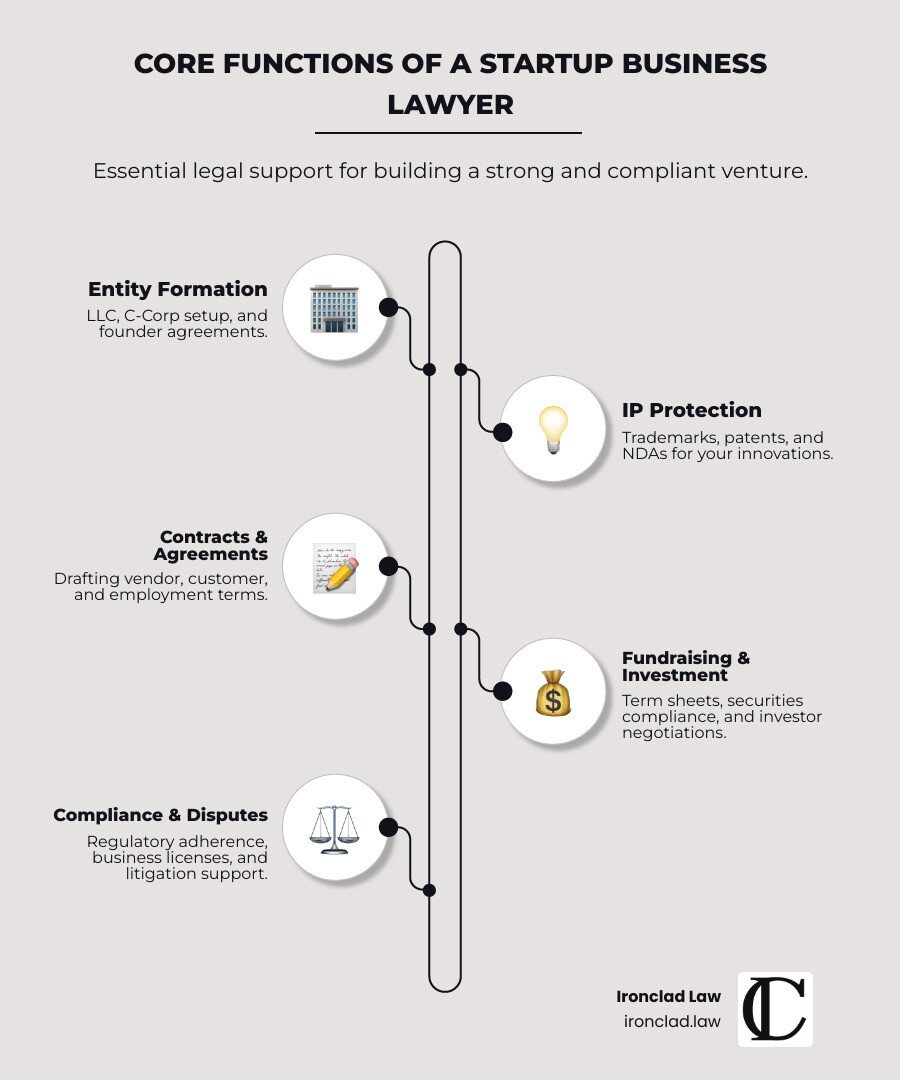
Entity Formation and Corporate Structure
Choosing your legal structure (LLC, C-Corp, or S-Corp) is one of your first and most crucial decisions, with major implications for liability, tax, and fundraising. A business lawyer for startup will help you select the best structure for your goals.
Beyond formation, they’ll draft essential documents like Articles of Incorporation, operating agreements, and bylaws. If you have co-founders, a well-crafted shareholder or partnership agreement is non-negotiable. This document outlines ownership, responsibilities, and what happens if a co-founder leaves. We’ll also help you establish vesting schedules for founder equity, ensuring ownership is earned over time and incentivizing long-term commitment. Getting this wrong can lead to painful disputes later on.
To ensure your business starts on the strongest possible legal footing, learn more about our expertise in corporate business formation.
Intellectual Property (IP) Protection
Your startup’s unique ideas, brand, and inventions are its most valuable assets. Without protection, they can be stolen, undermining your competitive edge. A business lawyer for startup specializing in intellectual property (IP) is your first line of defense.
They’ll help you identify and protect your IP (trademarks, copyrights, trade secrets). This includes conducting trademark searches, filing applications with the U.S. Patent and Trademark Office (USPTO), and drafting robust Non-Disclosure Agreements (NDAs) to protect confidential information. They can also assist with licensing agreements, allowing you to monetize your IP while retaining ownership. Protecting your innovations from day one is a vital investment.
Contracts and Agreements
Your startup will constantly enter into contracts. These aren’t just formalities; they are the legal basis of your business relationships. A business lawyer for startup is invaluable for drafting, reviewing, and negotiating these critical documents.
Consider the volume: vendor contracts, customer agreements, employment contracts, and Terms of Service for your website. Each needs to be carefully crafted to mitigate risk and protect your interests. We ensure every agreement clearly defines obligations, payment terms, IP ownership, and dispute resolution mechanisms. This proactive approach prevents misunderstandings that could escalate into costly legal battles.

For comprehensive management of all your vital business documents, explore our services in business contract management.
Fundraising and Financing
Raising capital is the lifeblood of many startups, but it’s legally complex. Whether you’re seeking funds from angel investors or VCs, each round has unique legal requirements. A business lawyer for startup financing is indispensable.
They’ll guide you through term sheets, ensuring you understand the implications on your ownership and control. They will also ensure compliance with federal and state securities laws, such as the regulations under the Jumpstart Our Business Startups (JOBS) Act of 2012. Navigating these rules, which are enforced by bodies like the Securities and Exchange Commission (SEC), without expert counsel can lead to severe penalties.
The right lawyer will help you structure these deals to align with your long-term goals, preventing future dilution or control issues. For more information on navigating the legal landscape of startup fundraising, see our page on legal services for entrepreneurs.
Regulatory Compliance and Dispute Resolution
The regulatory landscape is a shifting maze of federal, state, and local rules. Depending on your industry, you may face regulations for data privacy, consumer protection, or licensing. A business lawyer for startup helps you identify and adhere to all applicable laws, preventing fines and reputational damage.
Beyond compliance, disputes are an unfortunate reality. These can range from contract breaches to shareholder disagreements. Having a legal team that understands your business is crucial. As “bulldog” litigators, we thrive on fiercely fighting for our clients’ rights and are always ready to go to trial when necessary. Our goal is to resolve disputes efficiently while protecting your interests.
To keep your business on the right side of the law, explore our insights on business regulatory compliance. And when conflicts arise, we’re here to help with business dispute resolution.
Mergers, Acquisitions, and Exit Strategies
It’s never too early to consider your exit strategy, as it influences your initial legal and corporate structure. Whether you plan to sell or merge, a business lawyer for startup with M&A expertise is crucial for navigating the process.
They represent your interests, whether you’re the seller (sell-side representation) or the buyer (buy-side due diligence). This involves navigating complex negotiations, conducting thorough due diligence, drafting acquisition agreements, and ensuring a smooth transition. An experienced M&A lawyer can help you maximize your valuation and achieve the best possible outcome.
For comprehensive guidance on navigating the complexities of business transactions, visit our page on mergers & acquisitions.
When to Hire and What to Expect
The question isn’t if you need a business lawyer for startup, but when. The answer is simple: as early as possible. Proactive legal guidance is far more cost-effective than reactive damage control. It’s like building a strong foundation for a house—it’s much harder and pricier to fix structural issues later.
Critical moments that demand legal expertise include:
- Before you launch: Choosing your entity, drafting founder agreements, and protecting your initial IP.
- Bringing on co-founders or key employees: Equity agreements, employment contracts, and non-competes.
- Seeking your first investment: Navigating term sheets, investor agreements, and securities compliance.
- Signing any significant contract: Leases, vendor agreements, customer contracts.
- If you face a lawsuit or dispute: Immediate legal counsel is paramount.
Waiting for a problem to arise puts you on the defensive, leading to higher costs and greater risks. A great startup lawyer is a core team member who provides ongoing support to address challenges before they escalate.
Common Misconceptions About Hiring a Startup Lawyer
We hear these myths all the time, and we’re here to bust them!
Myth 1: Hiring a business lawyer is too expensive for a startup.
While legal fees are an expense, consider them an investment. The cost of not having proper legal counsel—a lawsuit, lost intellectual property, or a bad contract—is far higher. As the adage goes, “If you think hiring a professional is expensive, try hiring an amateur.”
Myth 2: I can handle my startup’s legal issues on my own with online templates.
Generic online templates rarely fit your unique business needs, especially in states like California or New York with stringent regulations. They lack custom legal advice and can expose you to significant risks. Founders often underestimate legal complexities—it’s like performing surgery on yourself using an online video.
Myth 3: I only need a business lawyer when I’m facing a legal problem.
This reactive approach is a recipe for disaster. A business lawyer for startup should be a proactive partner, helping you avoid problems in the first place. Engaging a lawyer only in a crisis is like calling the fire department after your house has burned down.
Understanding the Costs of a Business Lawyer for a Startup
What does a business lawyer for startup cost? While it depends on your needs, we can provide a clear picture of what to expect.
Hourly rates for a small business attorney typically range from $150 to $325, though rates for highly specialized counsel can exceed $1,000. Many firms that work with startups understand cash constraints and offer flexible fee arrangements.
Common fee structures include:
- Hourly Rates: The most traditional model, suitable for ongoing advice or unpredictable workloads.
- Flat Fees: Often used for specific, well-defined tasks like entity formation, contract drafting, or trademark filings. This provides cost predictability.
- Retainers: A fixed monthly fee for a set amount of legal work, providing continuous access to legal advice.
- Deferred Billing/Equity: Some startup-focused firms may offer reduced fees or defer payments in exchange for a small equity stake, effectively “investing” in your startup.
While some online legal services offer low-cost subscription plans for basic advisory services, these are generally for very simple, standardized tasks. For the complex, strategic, and often high-stakes issues a growing startup faces, a dedicated attorney’s expertise is invaluable.
The key is transparency. Your attorney should provide a clear, written fee agreement. Discuss your budget openly to find a solution that protects your business without breaking the bank.
For a custom quote custom to your startup’s specific needs, don’t hesitate to contact Ironclad Law today.
How to Choose the Right Legal Partner
Selecting the right business lawyer for startup is as critical as choosing a co-founder. They will guide key decisions and represent your interests, so your vetting process must be thorough, focusing on expertise, fit, and communication.
Seek referrals from other founders or your personal attorney. While online directories can be a starting point, always verify credentials. During interviews, assess their legal prowess, trustworthiness, and personal chemistry. You need a reliable sounding board who understands your vision.
General Business Lawyer vs. a Specialized Startup Lawyer
The distinction between a general business lawyer and a specialized startup lawyer is crucial. A startup specialist brings a unique skill set custom to emerging companies.
| Criteria | General Business Lawyer | Specialized Startup Lawyer |
|---|---|---|
| Industry Experience | Broad experience across various industries, often with mature businesses. | Deep familiarity with technology, SaaS, biotech, e-commerce, or other emerging sectors. Understands unique challenges and growth patterns. |
| Fundraising Knowledge | May understand general corporate finance, but less likely to be expert in seed rounds, venture capital term sheets, or specific securities regulations (e.g., Reg CF). | Proficient in all stages of startup fundraising, from pre-seed to Series D. Knows investor expectations and can optimize deal terms. |
| Fee Structures | Typically hourly rates, less likely to offer flexible arrangements for unfunded startups. | Often offers flexible fee arrangements like flat fees for specific tasks, retainers, or even deferred billing/equity for promising early-stage companies. |
| Network Connections | May have connections to banks or traditional business lenders. | Extensive network of angel investors, venture capitalists, incubators, and other key players in the startup ecosystem. Can make valuable introductions. |
| Approach & Pace | Often more cautious, focused on minimizing risk in established environments. May not appreciate the “move fast and break things” startup mentality. | Understands the need for speed and practical solutions. Balances legal protection with the agility required for rapid growth. |
| Scalability | May be suitable for stable, predictable legal needs. | Equipped to handle rapid growth, international expansion (especially for companies in California or New York that often operate globally), and complex exit strategies. |
Venture capital investors expect you to have counsel experienced in venture financings. Avoid lawyers who only “dabble” in startup law. A specialist understands founder equity, vesting, and the pressures of scaling. Many firms with dedicated startup practices offer a “one-stop shop” with access to specialists in IP, tax, and employment law as you grow.
Key Questions to Ask a Potential Business Lawyer for Your Startup
Come to your interviews prepared with pointed questions to gauge the lawyer’s expertise, working style, and fit for your venture.
Here are some essential questions to ask:
- How much experience do you have with startups specifically? Don’t just ask about general business law. Inquire about how many startups they’ve guided from inception to funding rounds or exits.
- Do you have experience with my industry? Businesses in different industries (e.g., SaaS, biotech, fintech) are subject to unique rules and regulations. A lawyer familiar with your sector can anticipate challenges and ensure compliance.
- What is your typical fee structure and rates for startups? Do you offer a free initial consultation? Be upfront about costs. Discuss hourly rates, flat fees for specific tasks, retainer options, and if they offer any flexible arrangements for early-stage companies.
- Who else on your team will be working on my case? Understand if your primary contact will be handling all your matters or if junior associates or paralegals will be involved, as this can affect both cost and communication.
- What’s the typical timeline for projects like [mention a specific need, e.g., entity formation or a contract review]? Get a sense of their responsiveness and efficiency.
- How will you communicate with me, and how often? Establish preferred communication methods (email, phone, video calls) and expectations for response times.
- Do you have any potential conflicts of interest with representing my business? It’s crucial to know if they’ve represented competitors, former co-founders, or key partners that could compromise your comfort in sharing confidential information.
- Are you willing to go to trial if necessary? As an aggressive firm, we believe in fiercely fighting for our clients’ rights, and we’re always ready to take a case to court if it’s the best path to protect your interests.
Maximizing Your Attorney-Client Relationship
Once you’ve chosen your business lawyer for startup, building a strong, productive relationship is a two-way street. Here’s how to make the most of your legal partnership:
- Communicate Openly and Promptly: Your lawyer can only advise you effectively with all the facts. Share information freely and respond to inquiries in a timely manner.
- Trust Their Advice (and Ask for Clarity): You hired them for their expertise, so trust their counsel. If something isn’t clear, ask for an explanation. A good lawyer ensures you understand the implications of your decisions.
- Be Prepared for Meetings: Organize your questions and documents before meetings to save time and money (if billing hourly).
- Define Goals and Expectations: Clearly articulate your goals for each legal task so your lawyer can tailor their strategy accordingly.
- Pay Promptly: Just like any other vendor, timely payments maintain a healthy professional relationship. If you anticipate financial difficulties, discuss them openly.
- Use Your Lawyer as a Strategic Advisor: Beyond legal tasks, your lawyer can be a valuable sounding board for strategic business decisions. Leverage their experience and network.
By actively engaging with your legal counsel, you transform them from a mere service provider into a vital strategic partner. For more insights on leveraging legal expertise for long-term growth, explore our resources on strategic business planning.
Frequently Asked Questions about Startup Lawyers
Here are some common questions we encounter from founders navigating the legal landscape.
Can I use online legal templates or resources instead of hiring a lawyer?
While online templates can seem useful for basic tasks like initial incorporation, they have significant limitations. They provide generic documents that aren’t customized for your specific business, industry, or jurisdiction (a critical issue in states like California or New York).
Using a template without understanding its legal implications is risky. A dedicated business lawyer for startup provides custom advice and risk assessment that a template cannot. The cost of a mistake from a generic document can far outweigh the cost of proper legal counsel.
Should my startup lawyer have connections to investors?
Ideally, yes. While their primary role is legal guidance, a lawyer with strong connections to angel investors and VCs can be an invaluable asset. Many firms with startup practices have deep investor relationships and can provide warm introductions.
Angel investors, for example, often invest for various reasons, including passing on knowledge from previous startup exits. A lawyer who understands these motivations and has established relationships can facilitate meaningful connections. While not a primary requirement, a lawyer who can open doors to potential funding adds immense value.
How much should I budget for legal fees in my first year?
Budgeting for first-year legal fees is crucial, but costs vary based on your needs and business complexity. While there’s no single magic number, we can provide a general framework.
Typical legal services for a first-year startup might include:
- Entity Formation: Flat fees are common, ranging from a few hundred to a few thousand dollars.
- Founder Agreements & Equity Structures: This can range from a few thousand dollars to more if negotiations are complex.
- Initial Contracts: Drafting standard vendor, customer, and employment agreements might be flat-fee or hourly.
- Intellectual Property Filings: Trademark applications can cost a few hundred dollars per mark (excluding legal fees), with legal assistance adding thousands. Patent costs are much higher.
- Fundraising Documents: This can be a significant expense, often in the tens of thousands of dollars.
As mentioned, hourly rates typically range from $150 to $325, but can be higher for specialists. Some firms offer flexible arrangements for early-stage companies. A realistic first-year budget for foundational legal work could range from $5,000 to $25,000+, excluding major fundraising or litigation. This figure can be higher for startups seeking significant investment or in regulated industries. Always discuss your budget transparently and seek clear fee estimates.
Conclusion
The journey of a startup is exhilarating, but it’s also paved with legal intricacies that can make or break your venture. A dedicated business lawyer for startup is not a luxury; they are an essential lifeline, providing the foresight, protection, and strategic guidance you need to thrive. From laying a solid legal foundation with proper entity formation and ironclad contracts to safeguarding your intellectual property, navigating complex fundraising, and ensuring regulatory compliance, your legal partner is there every step of the way.
By choosing the right legal team – one with startup-specific expertise, industry knowledge, and a proactive approach – you’re not just buying legal services; you’re investing in your future success and peace of mind. Here at Ironclad Law, we pride ourselves on being the “bulldog” litigators who fiercely fight for our clients’ rights, unafraid to go to trial when necessary. We understand the unique challenges startups face and are committed to helping you build a strong, legally resilient business.
Don’t leave your startup’s future to chance. Build a solid foundation and protect your venture from day one. Get expert legal counsel for your startup with Ironclad Law.